




AI agents are reshaping the enterprise like the cloud and SaaS did, only faster, far less predictably, and without the identity foundation to secure them. As agents spread across your environment, they act on behalf of your users, connect to your most sensitive systems, and make autonomous decisions. When one goes rogue, the damage can spread to every system it touches — and there's often no kill switch. Organizations spent decades building identity security for humans. AI agents are undoing that work at machine speed.
The pattern is already playing out in breach reports. A recent incident at a well-known developer platform had no vulnerability and no infrastructure flaw, just an OAuth connection between an employee's corporate account and a third-party AI tool. When the AI tool was compromised, that pre-granted trust became the attack path: a straight line into the company's internal systems, API keys, tokens, and environment variables. This was an identity failure. Specifically, how third-party apps and AI tools are granted access, what they can do, and for how long.
The breach isn't an edge case. 88% of organizations report confirmed or suspected AI agent security incidents. Only 22% have identities tied to their agents.1 That gap between how many organizations have been hit, and how many are actually governing agents, is the new attack surface.
This is the new identity gap. Today, we're closing it.
Okta for AI Agents is now generally available, giving AI agents a first-class identity so you can discover, onboard, protect, and govern them across any agent framework, cloud, or SaaS environment.
The three questions every organization needs to answer
Securing AI agents comes down to three questions every security leader is being asked right now:
- Where are my agents?
- What can they connect to?
- What can they do?
Here's how Okta for AI Agents answers each one.
Okta for AI Agents: What’s included in GA
Where are my agents?
Discover and onboard AI agents across your environment
Before you can secure AI agents, you need to see them. Okta’s Universal Directory gives organizations one place to register AI agents across any agent framework, cloud, or SaaS environment. You can import known agents from apps you have already configured or from the Okta Integration Network. The same breadth, standards, and flexibility you expect from Okta now extends to AI agents.
- Manage the identities of homegrown agents: Bring custom-built agents into Universal Directory as first-class identities. Assign human owners, apply existing identity controls, and search agents from one source of truth.
- Import agents from external platforms: Prebuilt integrations with Salesforce Agentforce, Amazon Bedrock AgentCore, and ServiceNow AI Platform enable you to bring known agents under governance in minutes.
- Discover Shadow AI agents: Detect shadow AI agents by identifying new OAuth consent grants in managed Chrome browsers, enriching them with user context, and surfacing unmanaged agents in a centralized view. Support for additional browsers is coming soon.
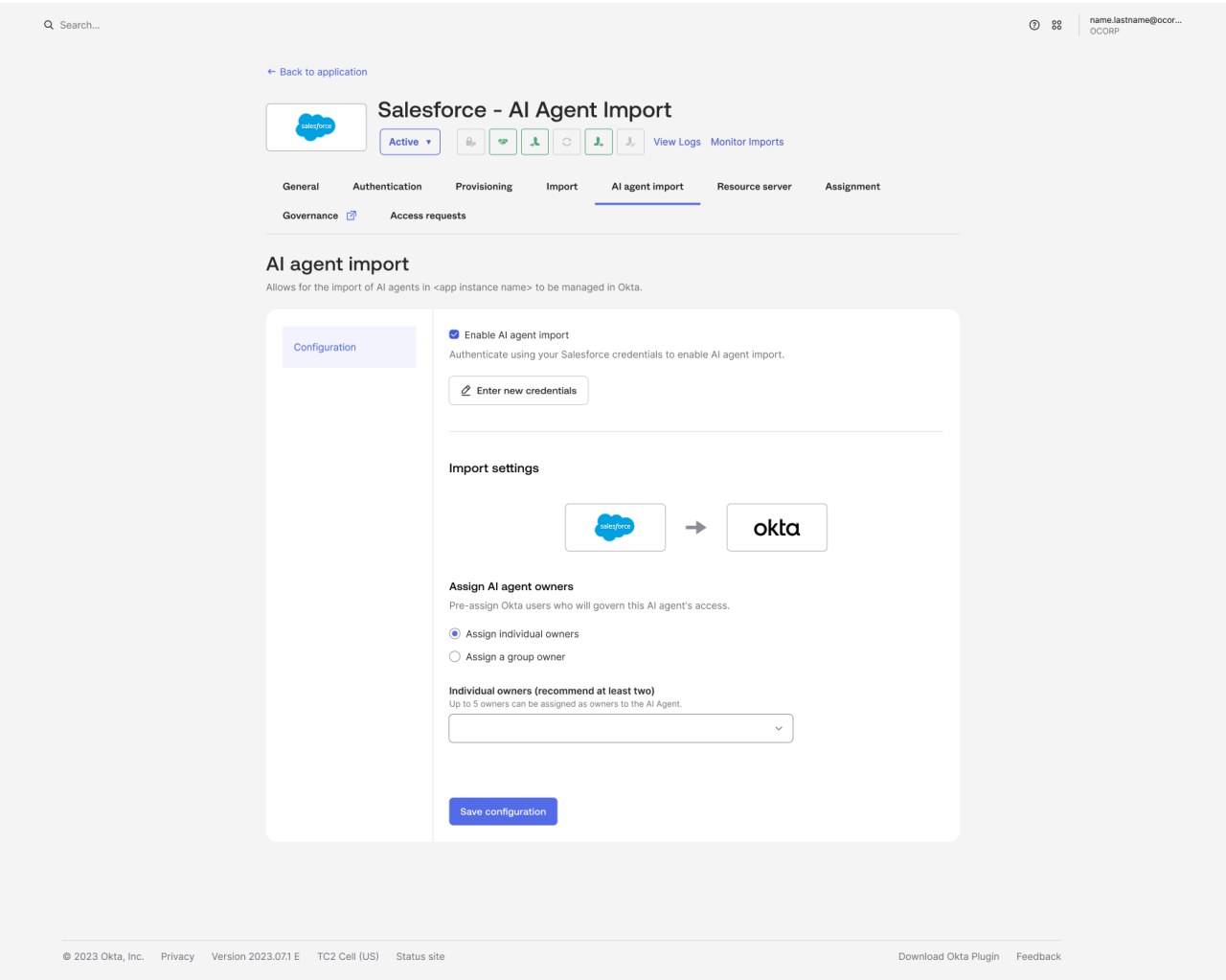 Fig 1: Import agents from external platforms
What can they connect to?
Protect agent access with managed, least-privilege connections
Once you know where your agents are, you need to map everything they can reach and enforce policy on every connection. Okta for AI Agents replaces hardcoded credentials and standing access with scoped, short-lived tokens, issued only for what the agent needs, only for as long as it needs it.
That protection extends across five resource types. Together, these capabilities help organizations enforce least privilege for AI agents in real time, without slowing down adoption.
 Fig 2: Supported resource connection types
- Authorization servers issue tokens with tightly defined scopes, so agents get only the API permissions required for a specific task.
- Secrets stay vaulted and are issued on demand, not embedded in code. This reduces secret sprawl and lowers your attack surface.
- Service accounts are managed through a governed system instead of being shared or unmanaged – giving control on how agents use privileged machine identities.
- Applications connect through managed consent flows backed by Okta's Secure Token Storage. This makes it easier to approve access, securely handle tokens, and understand which applications an agent is authorized to use.
- MCP servers are treated as governed resources, so agent access to the tools and services exposed through MCP is consistently secured and monitored.
What can they do?
Govern AI agents across their entire lifecycle
Once access is in place, you need to review it, revoke it, and account for every action an agent takes. Okta for AI Agents enables automated access reviews, structured approval workflows, and a kill switch your SOC can trust.
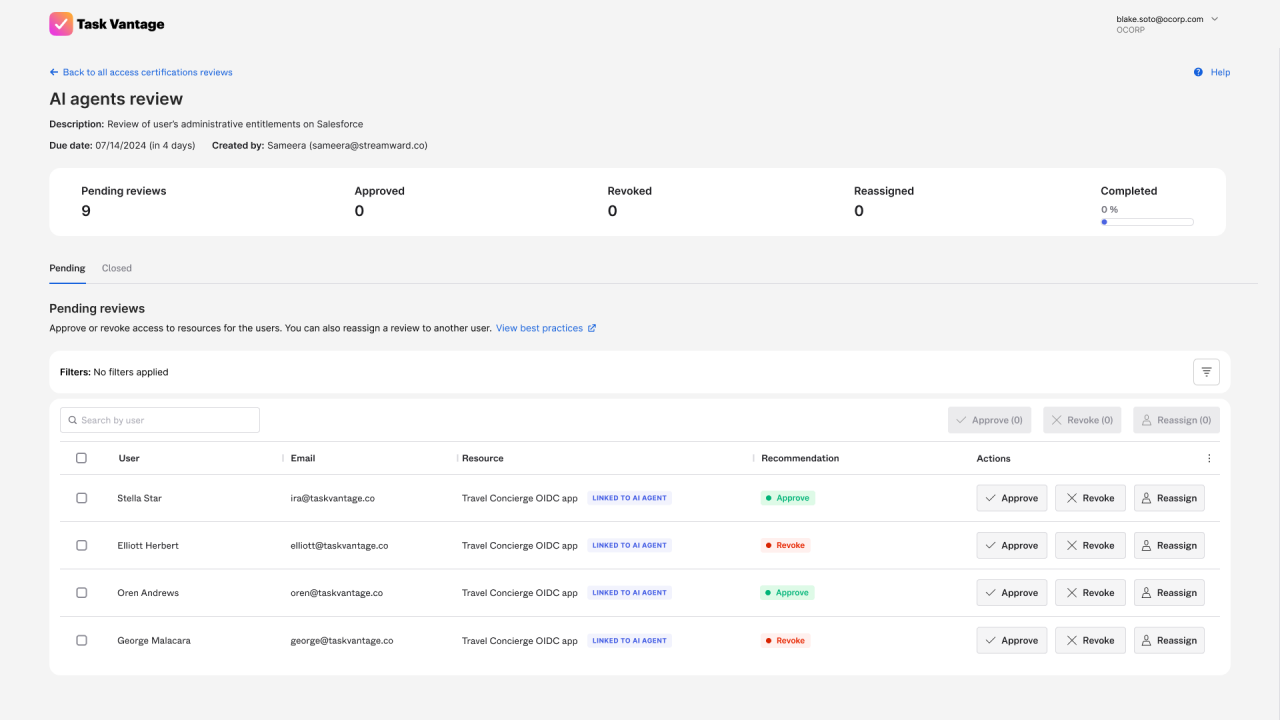 Fig 3: User access requests for AI agents
- Request access to AI agents: Users request agent access from their dashboard. Admins approve, automate, and enforce time-bound permissions.
- Certify access to AI agents: Bring agents into the same certification workflows you use for other enterprise resources. Owners, managers, and security teams can review and revoke with full auditability, ensuring agents retain only the permissions they need over time and that every decision is traceable.
- Deactivate rogue agents: When an AI agent goes rogue, agent deactivation gives you an instant kill switch with one audit trail and containment across every system before it leads to a larger security incident.
- Capture audit logs & telemetry: Every tool call, access attempt, and authorization decision is recorded. Stream telemetry to your SIEM to monitor behavior, support audits, and accelerate incident response.
Why Okta for AI Agents
- Vendor-neutrality. Your agents connect to any resource such as SaaS apps, APIs, MCP servers, other agents, regardless of which cloud, platform, or framework they run on. While cloud-native tools only secure their own ecosystem, Okta secures agents running on all of them.
- Full lifecycle, not a feature add. Discover, onboard, protect, and govern your agents. Most solutions solve one problem. Okta handles the entire lifecycle, from the shadow agents you didn't know existed to the kill switch that shuts them down immediately.
- Works with the IdP you already have. If your employees already sign in through another identity provider, keep using it. Okta federates with every major IdP, so your existing setup stays intact.
The largest enterprises are already making this shift.
"Adherence to standards-based management is critical for securing our agentic enterprise, right down to user lifecycle and access controls. Okta adds a critical identity layer for AI agents to help us innovate with speed and confidence." — Bryan Meister, Sr. Principal Architect, Yahoo.
In the months ahead, we're extending Okta for AI Agents with:
- Secure agent-to-agent delegation for trusted multi-agent workflows
- Agent Gateway: an Okta-hosted control plane for agent-to-tool traffic, extending governance through a fully managed service
- Threat detection to identify malicious agent activity
- Human-in-the-loop controls for high-stakes agent actions
Ready to bring your AI agents under governance?
The organizations that lead in AI won't be the ones that deploy the most agents. They'll be the ones that govern them.
- Already on Okta? Expand your identity fabric to agents. Talk to your Okta team
- Using another IdP? See how Okta becomes your agent IdP without touching your existing stack. Learn more | See the demo


