AI Agents at Work 2026: Securing the agentic enterprise
A global survey shows a stark divide between executive confidence in AI agents and how employees actually use them, creating a concerning security gap.
Our platforms secure all types of identity from AI agents to your customers, employees, and partners.
Okta is the neutral, powerful, and extensible platform that puts identity at the heart of your stack.
Okta and Auth0 deliver flexible, secure access. Build fast with our extensible platforms for customers, workforce, and non-human identities.
Our platforms secure all types of identity from AI agents to your customers, employees, and partners.
Our platforms secure all types of identity from AI agents to your customers, employees, and partners.
Okta is the neutral, powerful, and extensible platform that puts identity at the heart of your stack.
Okta and Auth0 deliver flexible, secure access. Build fast with our extensible platforms for customers, workforce, and non-human identities.
Our platforms secure all types of identity from AI agents to your customers, employees, and partners.
A global survey shows a stark divide between executive confidence in AI agents and how employees actually use them, creating a concerning security gap.

Software used to be deterministic, doing what it was told predictably and transparently. How quickly things have changed. Now, anyone can spin up an AI agent, agents can spawn more agents, and each one connects across apps, APIs, SaaS tools, and data systems. The result is thousands of new “black box” entities operating at machine speed, often with privileged access—and frequently outside of existing human-centric security controls.
Building a secure agentic enterprise requires a clear strategy—a blueprint for managing this new reality. It starts with establishing clear accountability and visibility before agents scale out of control. Organizations must be able to answer three questions:
Where are my agents?
What can they connect to?
What can they do?
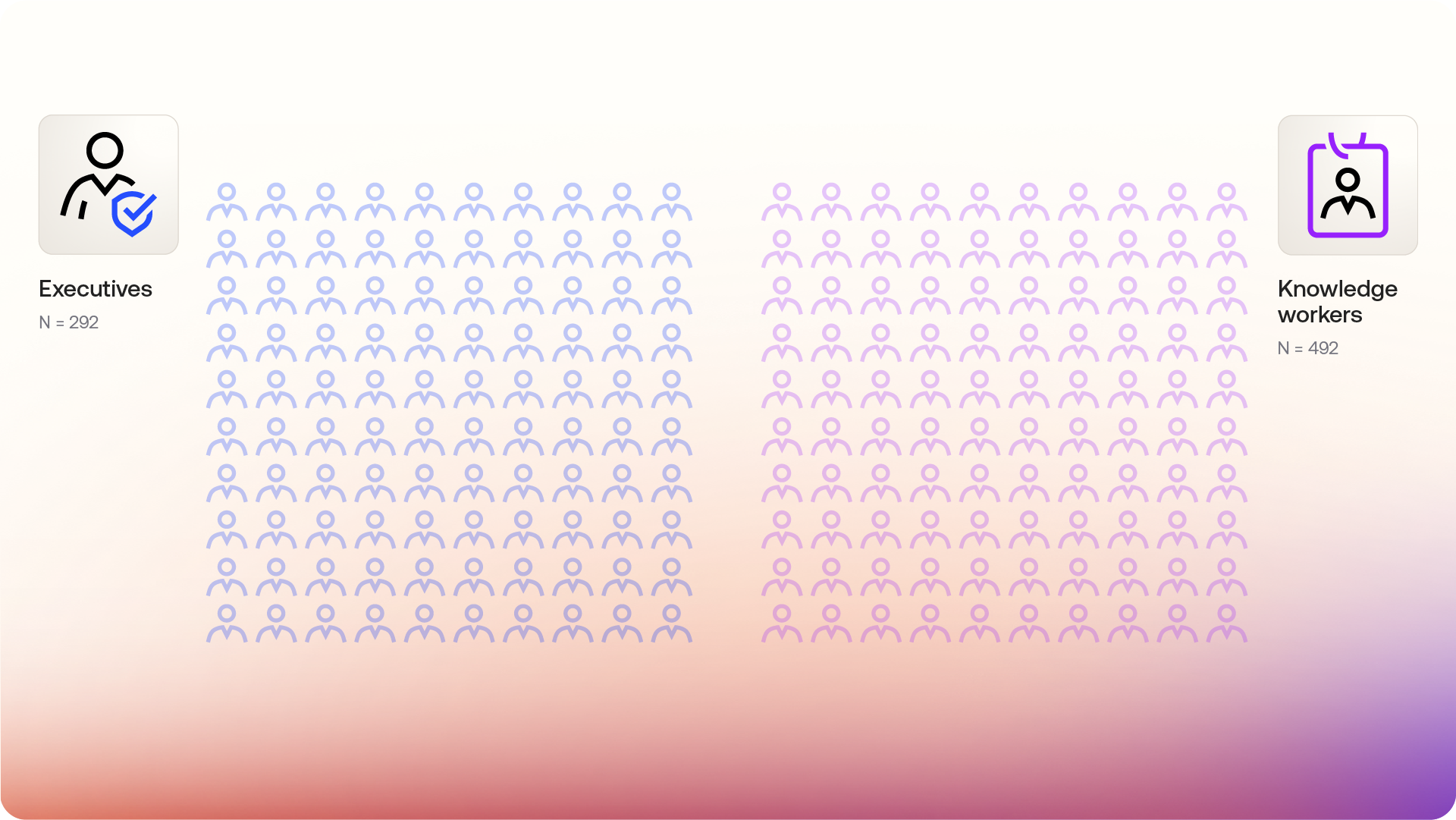
To understand how organizations currently measure up against this ideal, we commissioned an Apprize360 survey of 292 executives and 492 knowledge workers from companies of all sizes, in more than a dozen industries, across seven countries. The survey targeted C-level executives and vice presidents with authority over IT, security, data, and engineering, as well as knowledge workers in a variety of data-oriented roles (100% of whom reported working with AI in the prior three months).
Their informed insights expose a systemic breakdown in AI governance—attributable to unclear usage policies, widespread use of unapproved AI tools, and inadequate security safeguards—revealing a significant gap between the blueprint for a secure agentic enterprise and the reality on the ground.
But it's not all doom and gloom. Very real progress has been made on what a secure agentic enterprise can and should look like. There are new tools to assess your AI agent architecture and products to help identify, govern, and secure your agentic workforce. But before you begin the journey, it helps to understand the starting place.
Although ChatGPT was met by amazement when it debuted in November 2022, its functionality seems almost quaint when compared to today’s long list of LLMs and AI agents. Imagine a scenario in which a superagent like OpenClaw operates directly on your employees’ machines for nefarious purposes—executing terminal commands, accessing the file system, transferring data between applications, maintaining long-term memory, and autonomously performing complex workflows.
Organizations are struggling to secure the AI tools that are deploying within their IT environments. So why are governance efforts falling short? And what can be done to secure the AI tools organizations depend on?
Let’s take a deeper look.
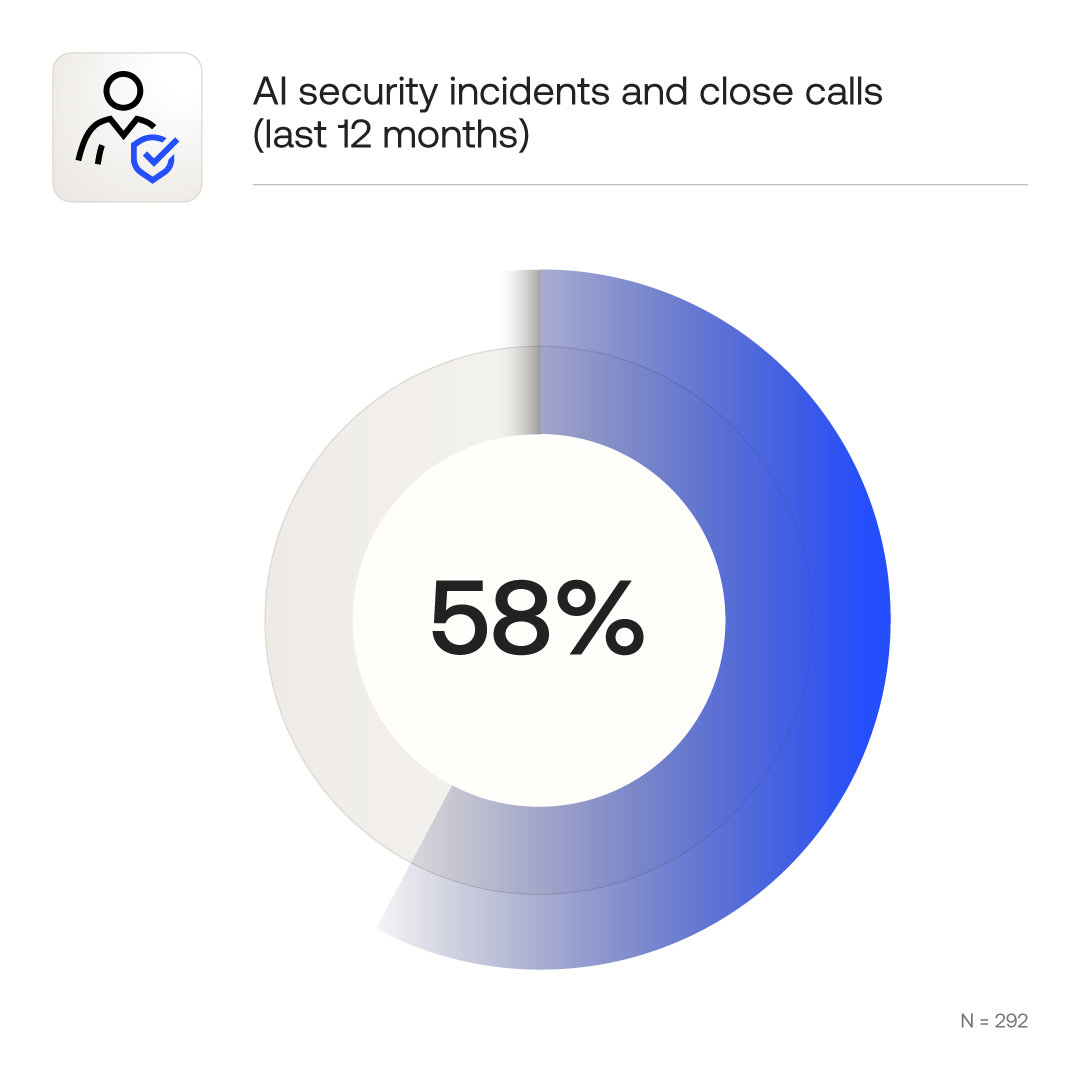
Survey question: In the last 12 months, has your organization experienced any AI-related security issues or close calls?
In just a few years, AI has become deeply embedded in organizations worldwide, with access to vast troves of sensitive information and long lists of critical systems.
However, usage policies—when they even exist—aren’t nearly as clear as leaders believe.
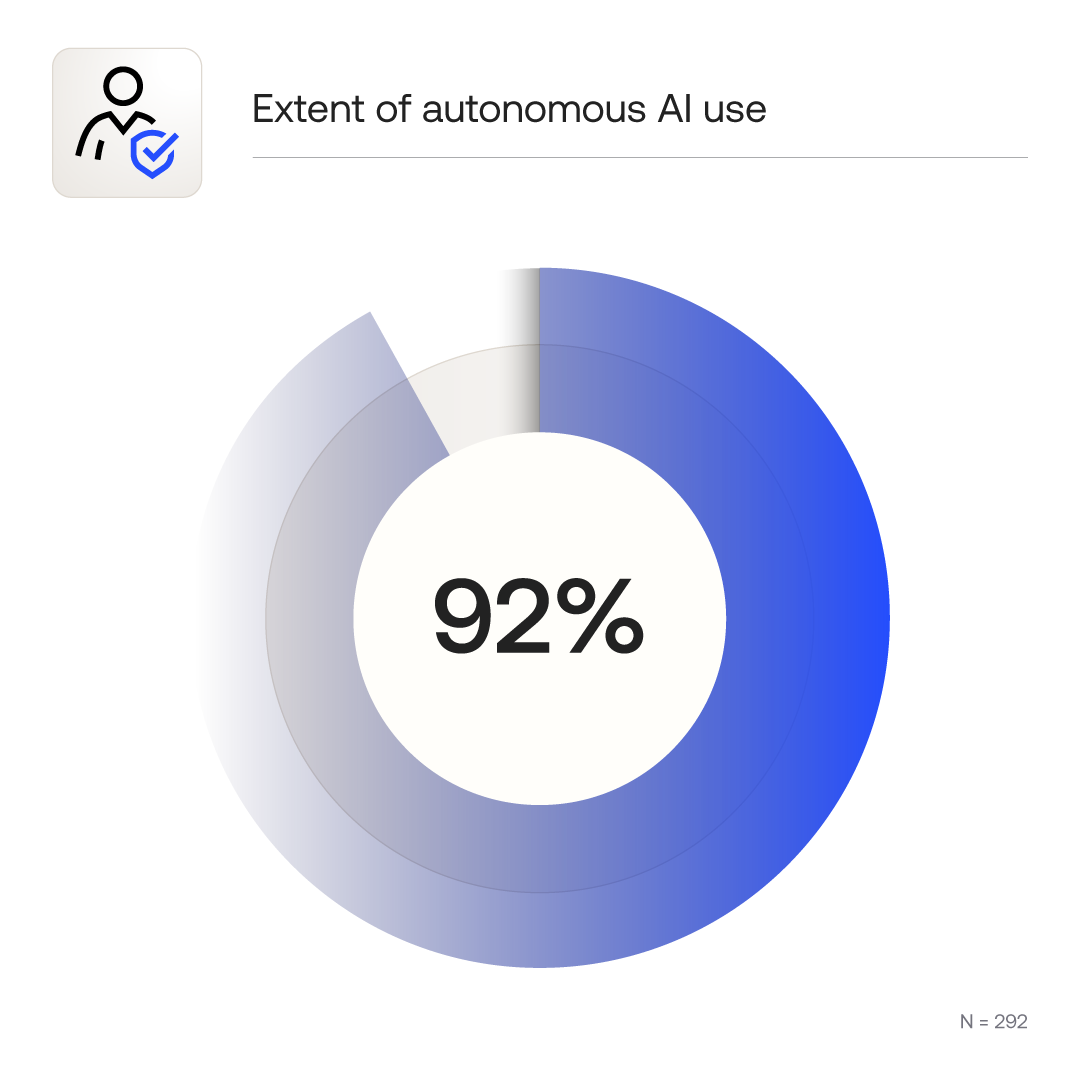
The vast majority (92%) of executives surveyed indicated that autonomous AI agents are already in widespread (58%) or moderate (35%) use within their organization.
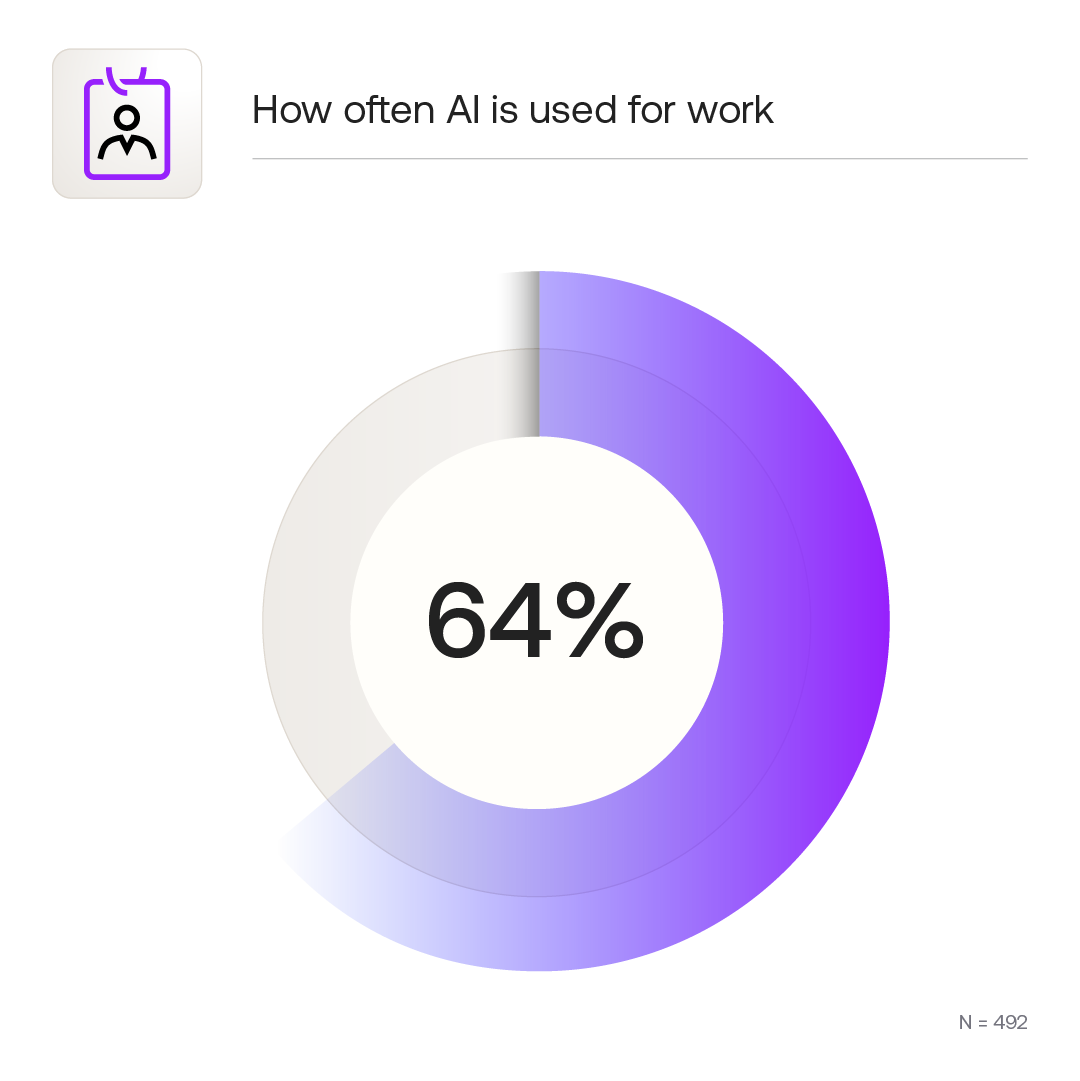
What’s more, nearly two-thirds (64%) of knowledge workers reported using an AI tool at least daily, and a similar proportion (65%) expect to use more AI tools in the next 6 months.
While today’s AI tools come in many forms, AI agents (used by 68% of workers) and LLMs/chatbots (62%) enjoy the most widespread use. Many other tools—including writing assistants, coding assistants, browser extensions, and industry-specific utilities—are also common.
What unites all of these tools is their need for data and, in many cases, access to an organization’s internal systems.
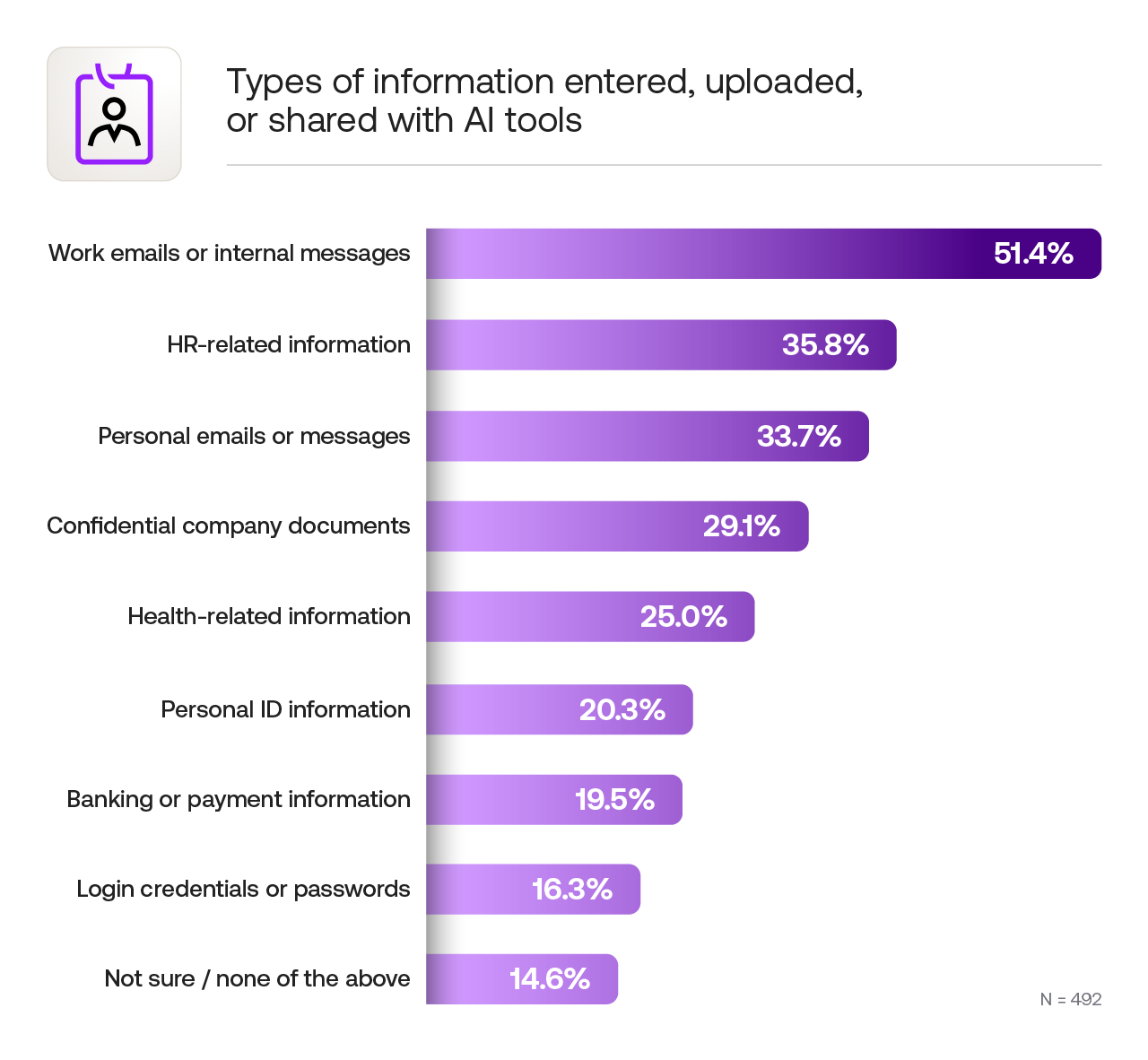
To get their work done, employees are feeding sensitive company and personal data into a wide array of AI tools, including agents, chatbots, and writing assistants.
Our data shows that employees routinely share:
Confidential company documents
HR-related information
Login credentials and passwords
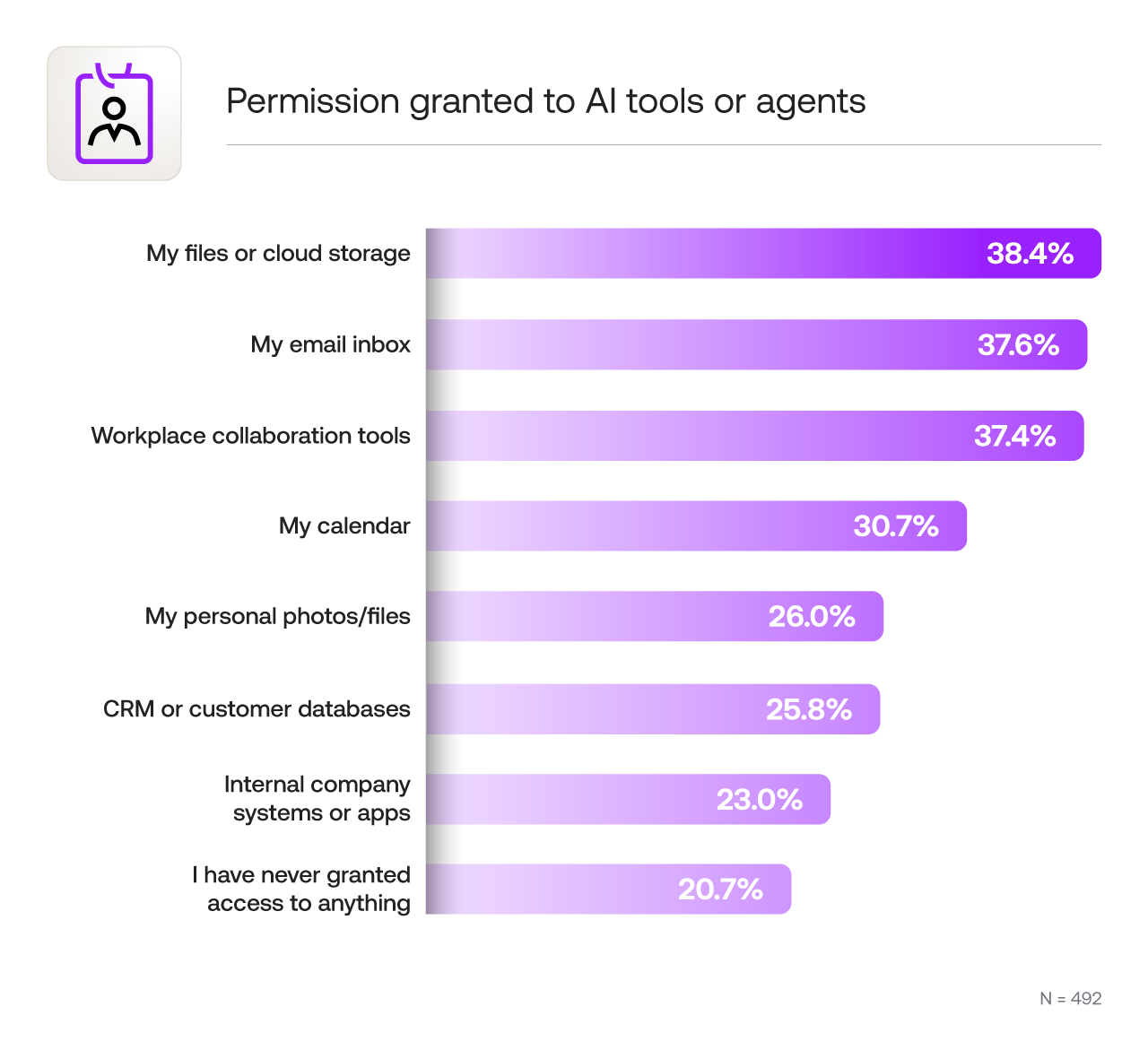
The risk extends beyond just data. Workers also grant AI tools direct access to critical internal systems, including email, cloud storage, collaboration tools, and CRM databases, significantly increasing the potential blast radius of a security incident.
This data sharing and system access is not inherently negative; it often drives significant productivity gains. However, it underscores the need for AI tools and systems to be monitored with extreme care.
A major finding from last year’s survey was the alarming gap between AI adoption and AI governance: While 91% of organizations were already using AI agents, only 10% had a well-developed strategy or roadmap for managing non-human identities (NHIs).
The past year has seen significant progress, as more than half (53%) of executives reported that their organization has an established strategy guiding AI deployment. Of course, this means that nearly half still don’t have such a strategy in place.
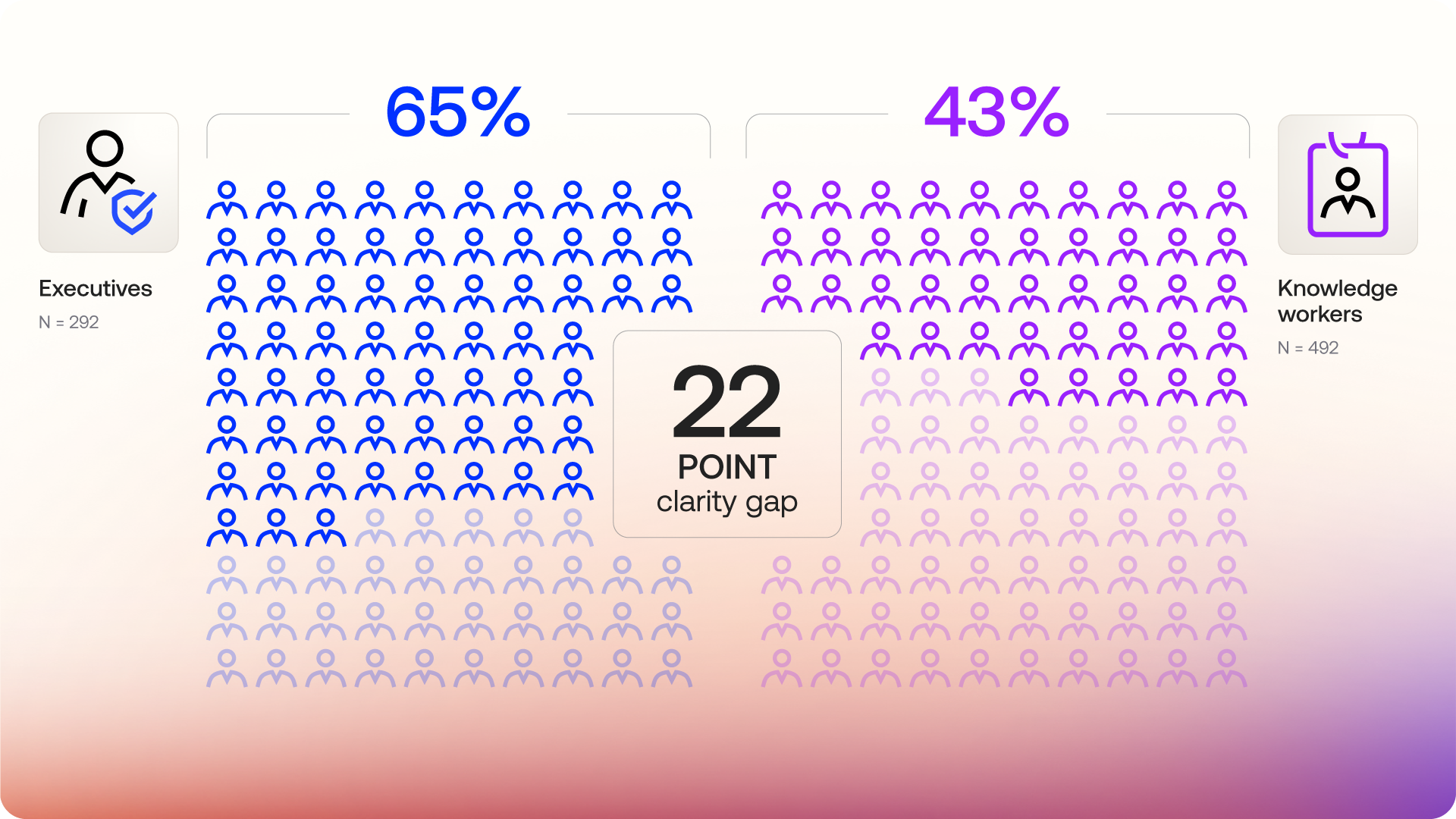
And other worrisome gaps remain. For example, 65% of executives reported that their organization’s AI usage policies are very clear, while only 43% of knowledge workers believe this to be the case.
Without effective oversight and management, AI adoption can create a dangerous situation in which enterprises lack insight into the purpose, activity, and access rights of AI agents in their environment, resulting in shadow AI.
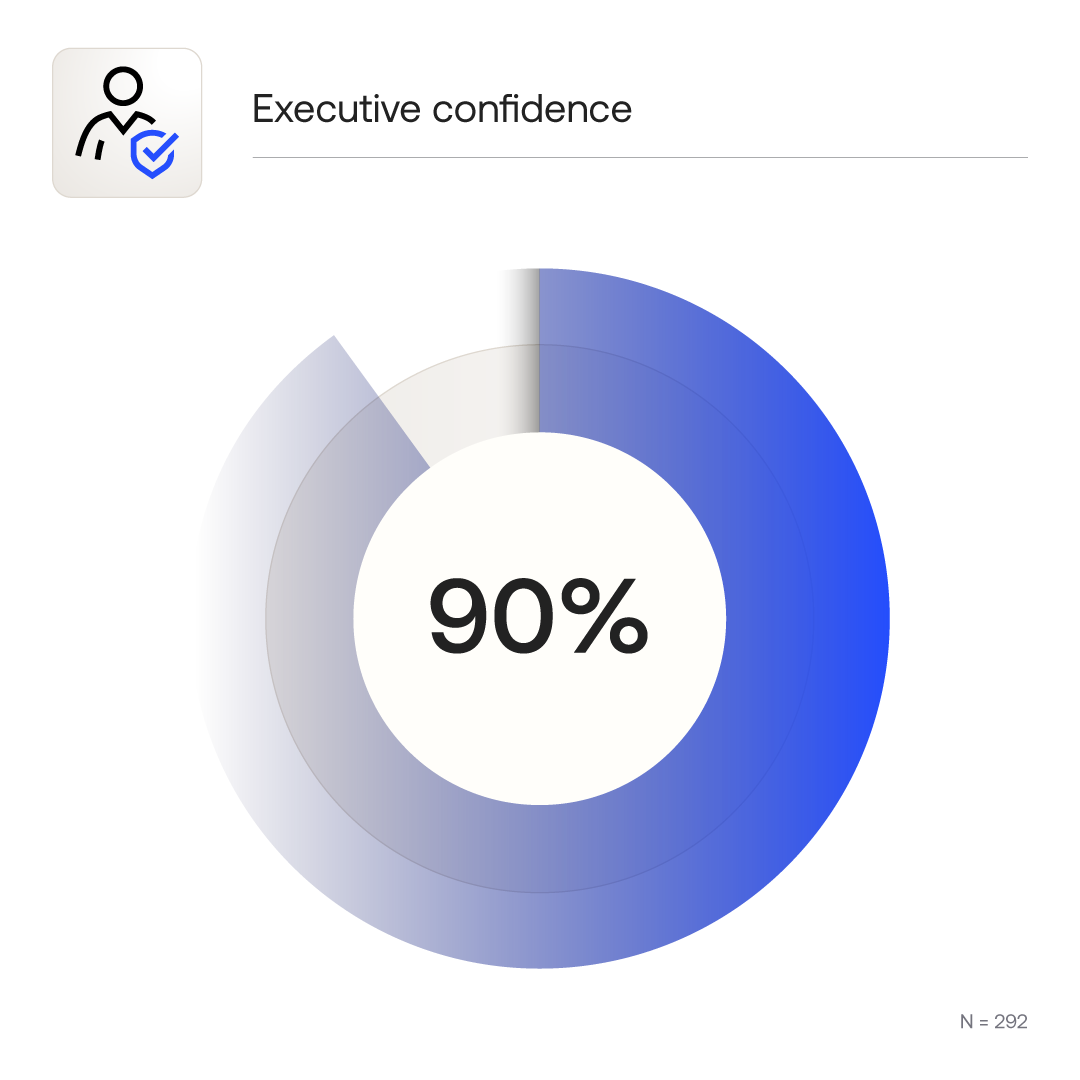
Survey question: How confident are you in your organization's visibility into AI tools being used across your organization?
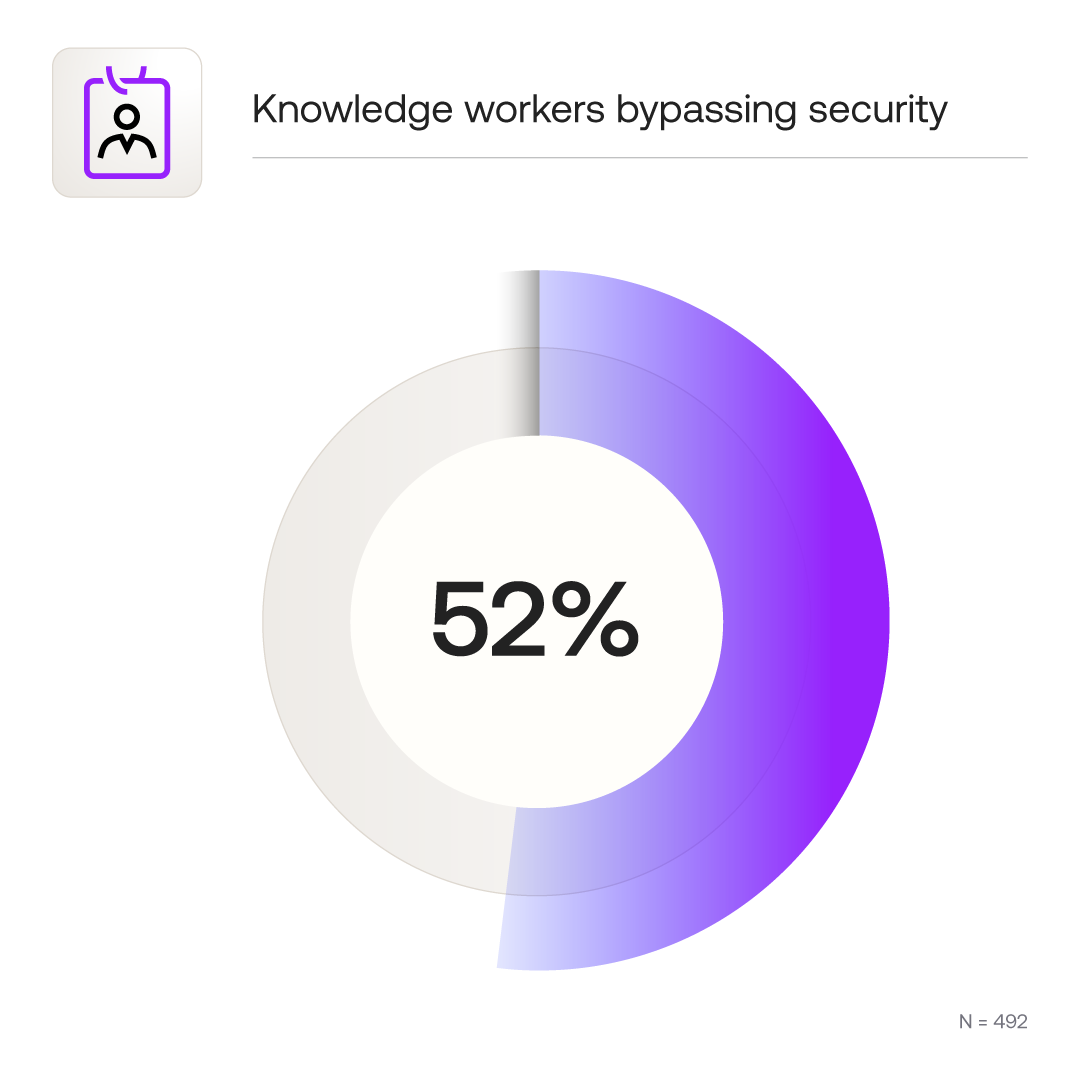
Survey question: Have you ever used an AI tool for work WITHOUT explicit approval from your IT or security team?
Leaders don't know what they don't know. The data shows that surveyed executives are underestimating the extent of shadow AI within their organizations.
The vast majority of executives (90%) are confident in their organization’s visibility into AI tools, but actual employee habits indicate that this confidence is misplaced—more than half (52%) of knowledge workers reported using unsanctioned AI tools at work, with nearly a quarter (24%) admitting to doing so regularly.
Knowledge workers who use unapproved AI tools are more likely to share sensitive information. Of those using unapproved AI tools, the top three most-shared types of information included internal messages and emails (54%), HR-related information (45%), and confidential company documents, including financials and contracts (39%). Over 20% of those using unapproved tools are also sharing login credentials and passwords, and 28% are sharing banking and payment information.
The vast majority (95%) of executives assume their employees are using AI responsibly. Given the large share of employees using unapproved tools and inputting sensitive information, such as login credentials, this confidence is likely misplaced.
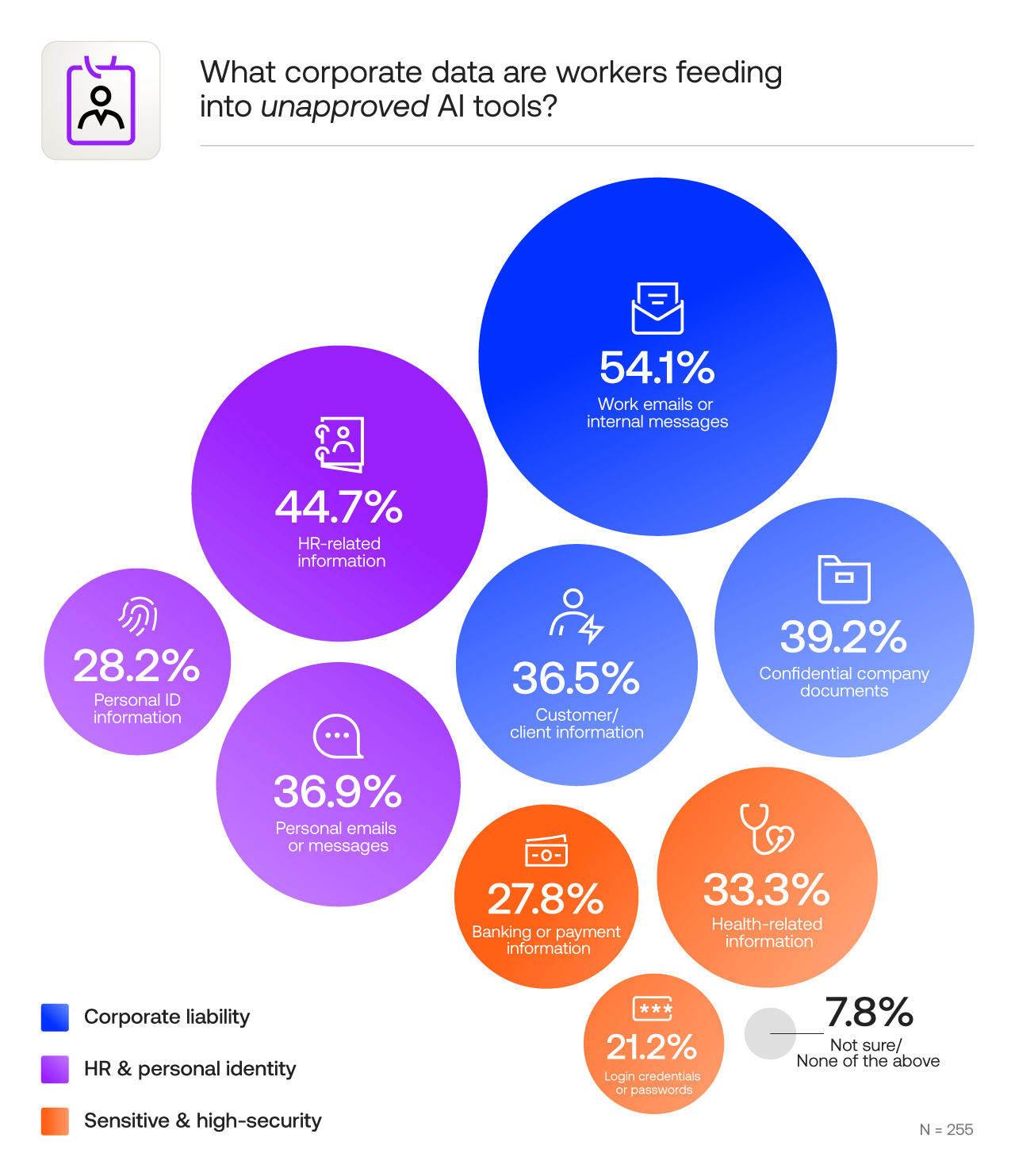
Survey questions: Which of the following types of information have you entered, uploaded, or shared with an AI tool or agent in the past 6 months. Select all that apply. (Responses limited to workers who use unapproved AI tools.)
While the gap between executive visibility and employee adoption of unapproved AI tools is a global phenomenon, its size varies by country, revealing different approaches to AI governance.
The gap is the most significant in the UK and Australia:
UK executives report the highest confidence in AI visibility (96%), yet over half of their employees (55%) use unapproved AI.
Australian leaders are similarly overconfident (94%) while nearly 60% of their workforce uses shadow tools.
The US leads all surveyed countries in shadow AI usage, with two-thirds of American workers (67%) using unapproved AI.
Executives in Canada and Japan expressed the lowest levels of confidence in their organizations' visibility into shadow AI, at 82% and 85%, respectively. Roughly half of the workers in both countries use shadow AI—50% in Canada and 48% in Japan.
In France and Germany, employees are the least likely to use unapproved AI, at just 31% and 32% respectively, suggesting that high executive confidence in these countries is more well-founded.
Why do employees bypass sanctioned AI tools? For most, it comes down to speed and social norms. The overwhelming majority of employees reported using unapproved tools because it's easier to use their own accounts (80%) or because their team already uses it and it's considered normal (78%).
The friction of official processes also plays a role, with 57% reporting that the approval process is too slow or difficult, and 49% noting that the approved tools simply do not meet their specific needs. Only a small percentage (6%) cited lack of awareness about the need for approval.
Last year’s survey revealed that 85% of leaders consider identity and access management (IAM) vital to the successful adoption and integration of AI within their organization.
This year, executives continue to express confidence in IAM as a critical layer of the broader security fabric:
of executives are confident in their organization’s IAM to secure non-human identities
executives are confident in their organization’s ability to detect AI acting outside its intended scope
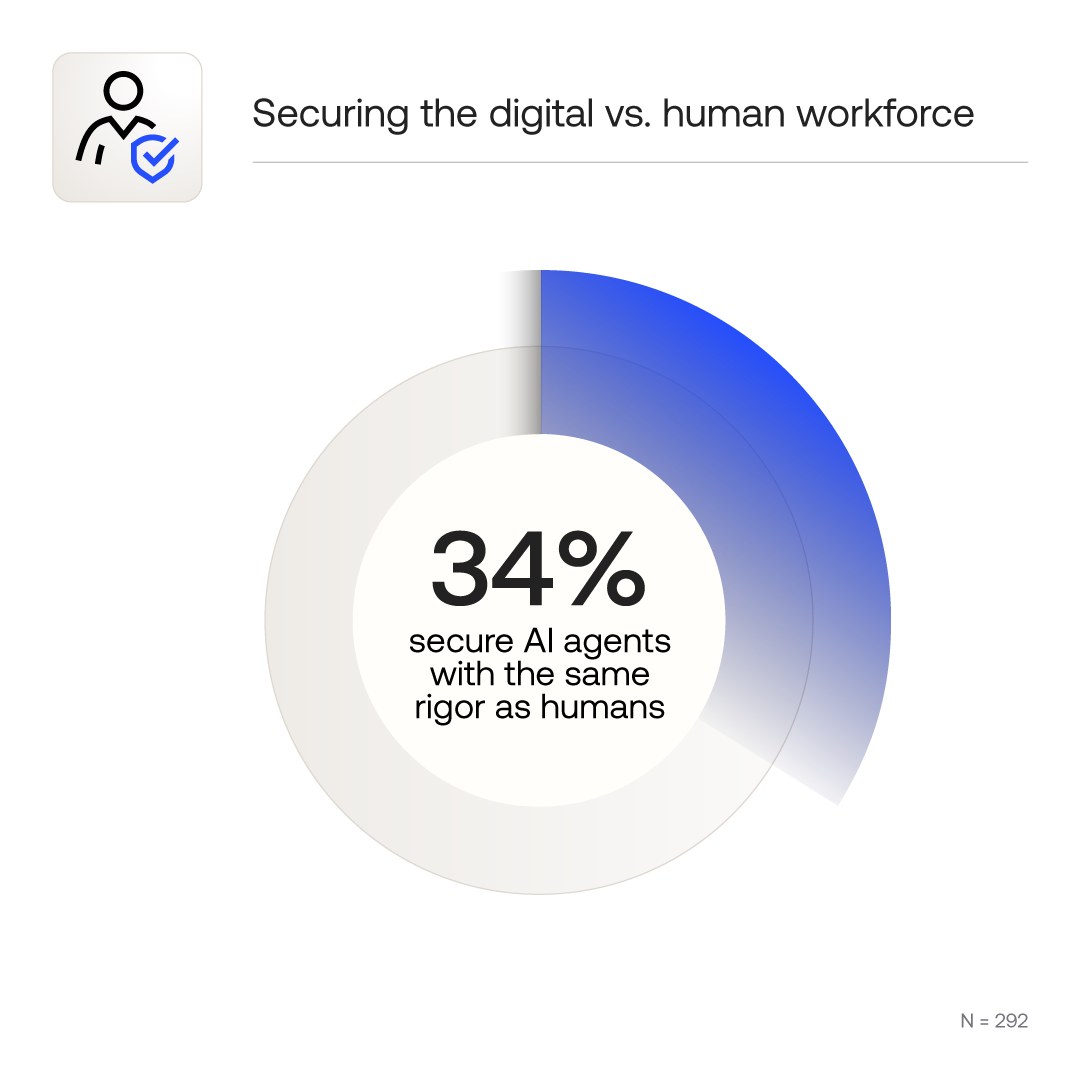
Again, the survey gives us a reason to question this confidence, as barely a third (34%) of executives reported that their organization always applies the same security controls to the digital labor force as it does to the human labor force.
When even a single compromised agent can chain access across your environment at machine speed, applying the same controls to AI agents that are applied to human employees should be table stakes.
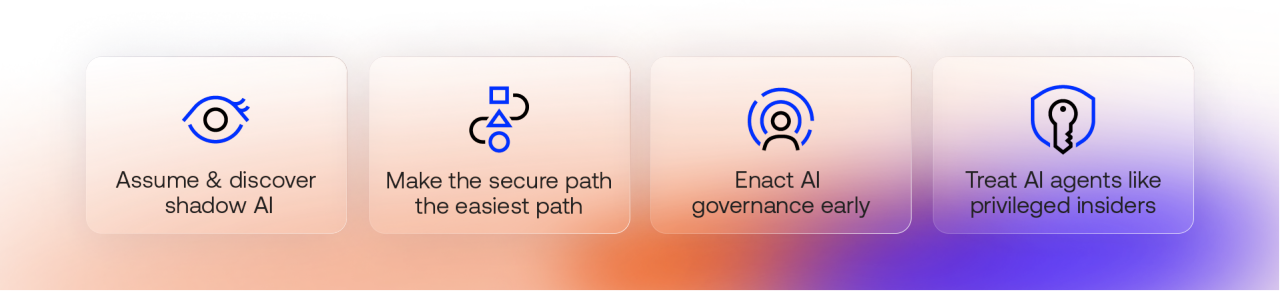
The data reveals a critical disconnect between executive confidence and workforce reality. To close this gap and secure your organization, here are four steps based on the findings of this survey:
By taking these steps, you can begin to close the AI governance gap, manage the real-world risks of an agentic workforce, and securely unlock the full potential of AI.
Commissioned by Okta, Apprize360 recruited 292 executives and 492 knowledge workers to take an online double-blinded survey exploring their perceptions, experiences, and usage habits regarding AI and AI agents.
Executive recruitment focused on CEOs, CIOs, CTOs, and vice presidents with authority over IT, security, data, and engineering; 91% of executive participants reported leading or overseeing teams responsible for AI implementation, governance, security, or strategy. Knowledge worker recruitment focused on workers with technical, sales, customer service, marketing, communications, business operations, and accounting roles; fully 100% of knowledge worker participants reported working with AI in the three months preceding the survey. Respondents were recruited from the US (23%), UK (22%), Australia (12%), Canada (12%), Japan (11%), France (10%), and Germany (10%). Apprize360 recruited the panel and fielded the survey in March 2026.