




Executive summary:
The Okta Unified Requester Experience is an Okta Identity Governance feature that centralizes access requests—built using Request Conditions or custom Request Types—into a single catalog accessible directly through the Okta dashboard, Slack, and Microsoft Teams. It allows end users to submit access requests within their primary workspace while giving admins flexible policy control without impacting user workflows.
Gaining swift access to critical tools while maintaining least privilege is a cornerstone of Okta Identity Governance. Since our product's inception, we've consistently innovated to help end users get the access they need faster and to empower admins to create and manage access policies that uphold a strong security posture and eliminate standing privileges.
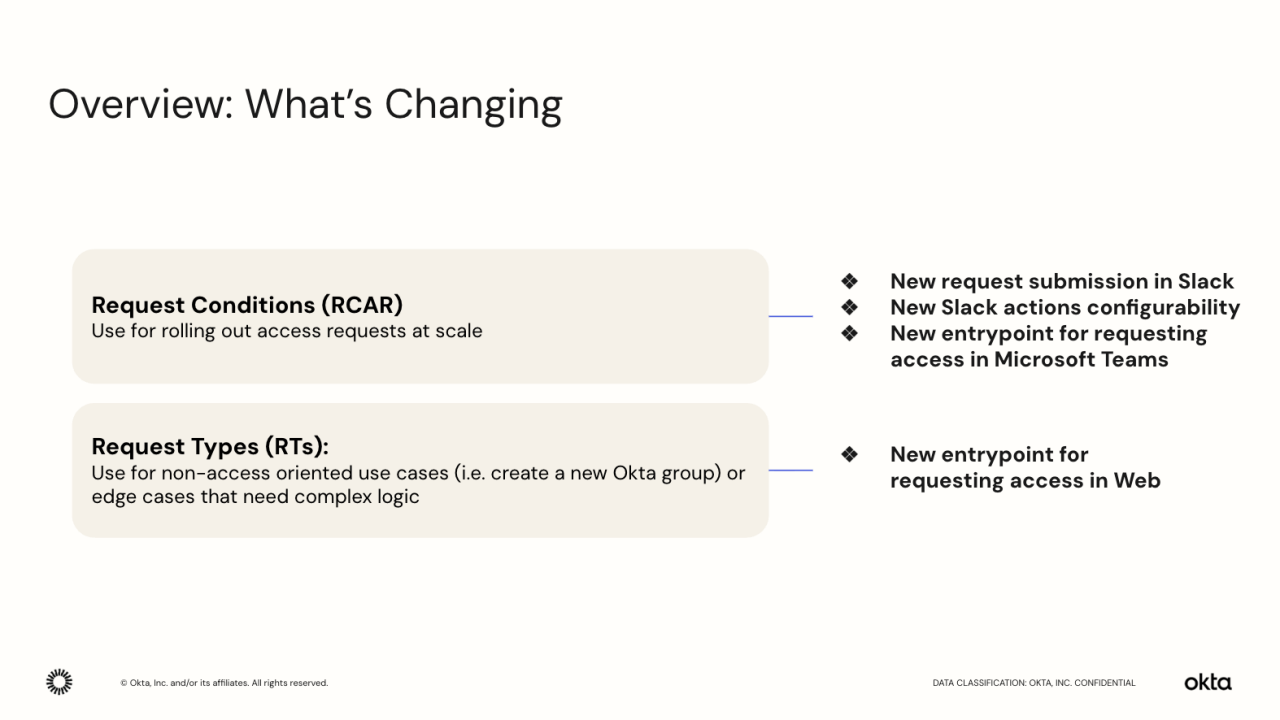
Continuing this commitment, the new Unified Requester Experience feature gives admins the autonomy to choose how they build Access Requests without compromising the requester’s workflow. Now, whether an Okta admin leverages the scalability of Request Conditions or the flexibility of custom Request Types, end users can intuitively initiate requests directly from the Okta dashboard, Slack, or Microsoft Teams.
How does the Unified Requester Experience simplify access requests for end users?
This integrated Access Request model makes it easier than ever for end users to get necessary access and stay productive:
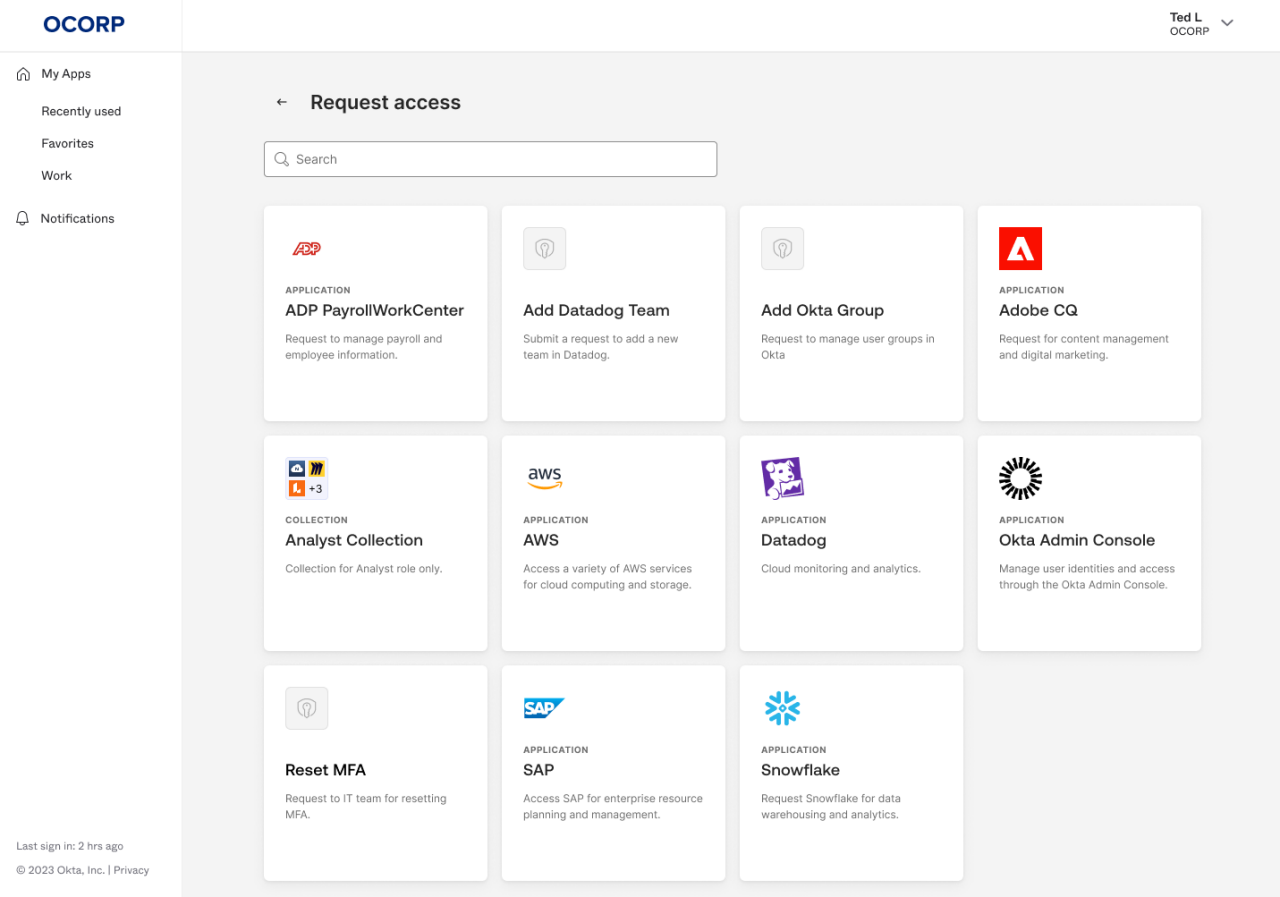
Centralized dashboard catalog
Browse the resource catalog and submit available requests directly from the Okta dashboard. Requests built with Request Types now appear alongside requests built with Request Conditions in a single catalog view.
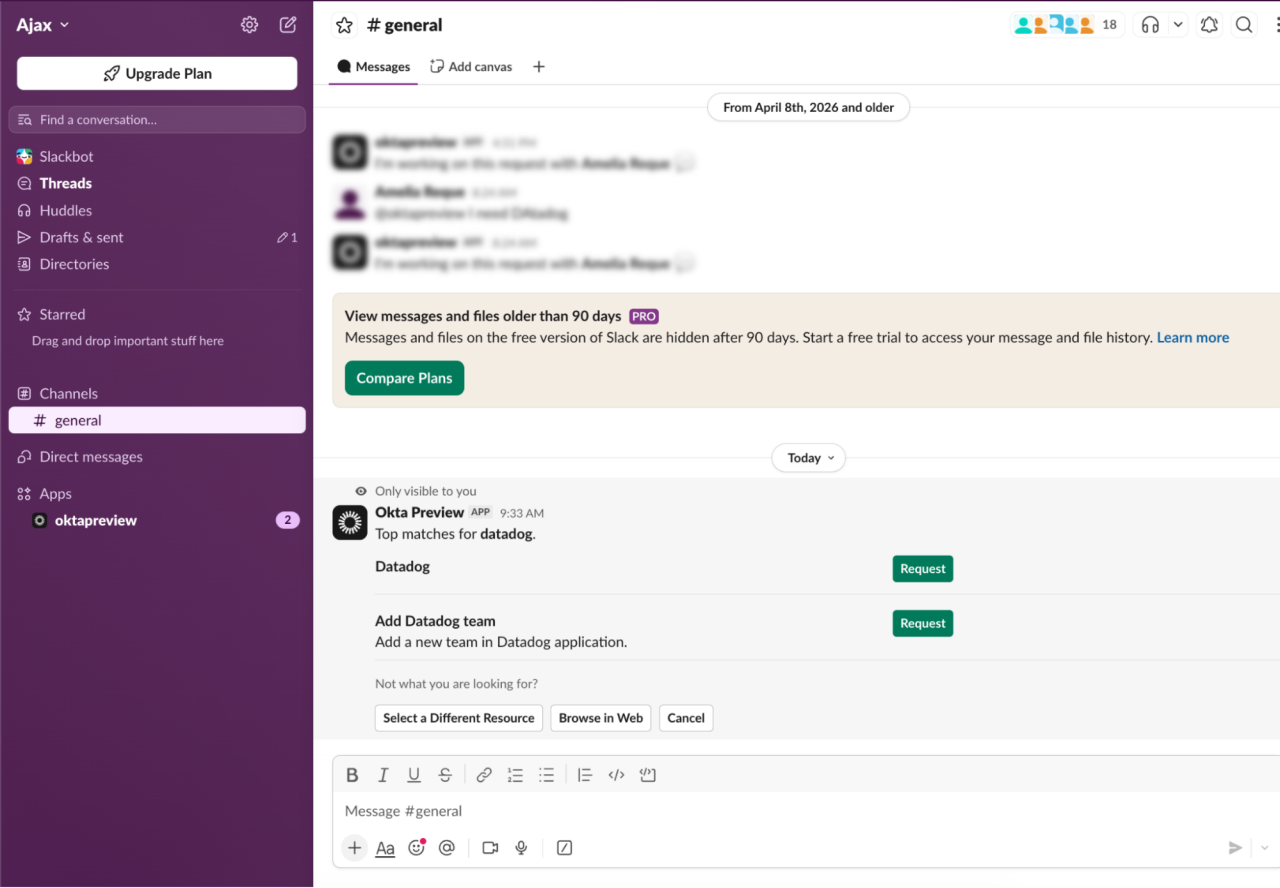
In-chat requests
Search and submit requests built with Request Conditions or Request Types directly from Slack or initiate directly from Teams, integrating Access Requests seamlessly into your workflow.
Real-time tracking and mobile approvals
- Track all requests and approval tasks seamlessly across Slack, Teams, email, or the Okta Access Requests application.
- Approve requests directly from Slack or Teams—or on the go with a mobile device.
What’s the difference between Request Conditions and Request Types?
Admins now have the flexibility to choose between standard Request Conditions and custom Request Types, on a case-by-case basis. The best part? They no longer need to worry about the impact on the end-user experience. Regardless of the underlying build model, it will be uniformly available to requesters in the unified resource catalog on their Okta dashboard, as well as in Slack and Teams.
- Request Conditions: Ideal for rolling out scalable Access Requests for applications, entitlement bundles, collections, and groups. Take advantage of out-of-the-box functionality like separation of duties, time-bound access, and request-on-behalf-of capabilities.
- Request Types: Perfect for building custom logic for advanced functionality or non-access-oriented use cases, such as requesting a multi-factor authentication (MFA) reset or the creation of a new Okta or Gmail group.
Shared governance benefits
Both configuration methods help organizations maintain a zero-trust security posture by enabling:
- Just-in-time access: Replace standing privileges for sensitive resources with time-bound access permissions
- Automated self-service: Increase efficiency by promoting self-service and remove manual, error-prone processes
What’s next?
We plan to continue investing in a seamless, scalable, and unified access request experience for both admins and requesters. This includes further unifying the request submission experience end-to-end in the web and streamlining the build experience for admins.
We’re excited to continue offering the broad use cases covered by Request Conditions and custom Request Types, all while making Access Requests straightforward for end users.
How to enable the Okta Unified Requester Experience
The Unified Requester Experience is now in Early Access for all Okta Identity Governance customers.
- Use self-service to enable this new feature in your Okta Admin Console.
- Follow the step-by-step configuration instructions in the Access Requests documentation.
Ready to dive deeper? Connect with one of our specialists.
These materials are intended for general informational purposes only and are not intended to be legal, privacy, security, compliance, or business advice.


