Produits
Nos plateformes sécurisent tous les types d’identités – des agents d’IA à vos clients, collaborateurs et partenaires.
Nos plateformes sécurisent tous les types d’identités – des agents d’IA à vos clients, collaborateurs et partenaires.
Okta vous offre une plateforme neutre, puissante et extensible qui place l’identité au cœur de votre pile technologique.
Okta et Auth0 offrent un accès flexible et sécurisé. Accélérez le développement grâce à nos plateformes extensibles pour les clients, les collaborateurs et les identités non humaines.
Nos plateformes sécurisent tous les types d’identités, des agents d’IA à vos clients, collaborateurs et partenaires.
Nos plateformes sécurisent tous les types d’identités – des agents d’IA à vos clients, collaborateurs et partenaires.
Okta vous offre une plateforme neutre, puissante et extensible qui place l’identité au cœur de votre pile technologique.
Okta et Auth0 offrent un accès flexible et sécurisé. Accélérez le développement grâce à nos plateformes extensibles pour les clients, les collaborateurs et les identités non humaines.
Nos plateformes sécurisent tous les types d’identités, des agents d’IA à vos clients, collaborateurs et partenaires.
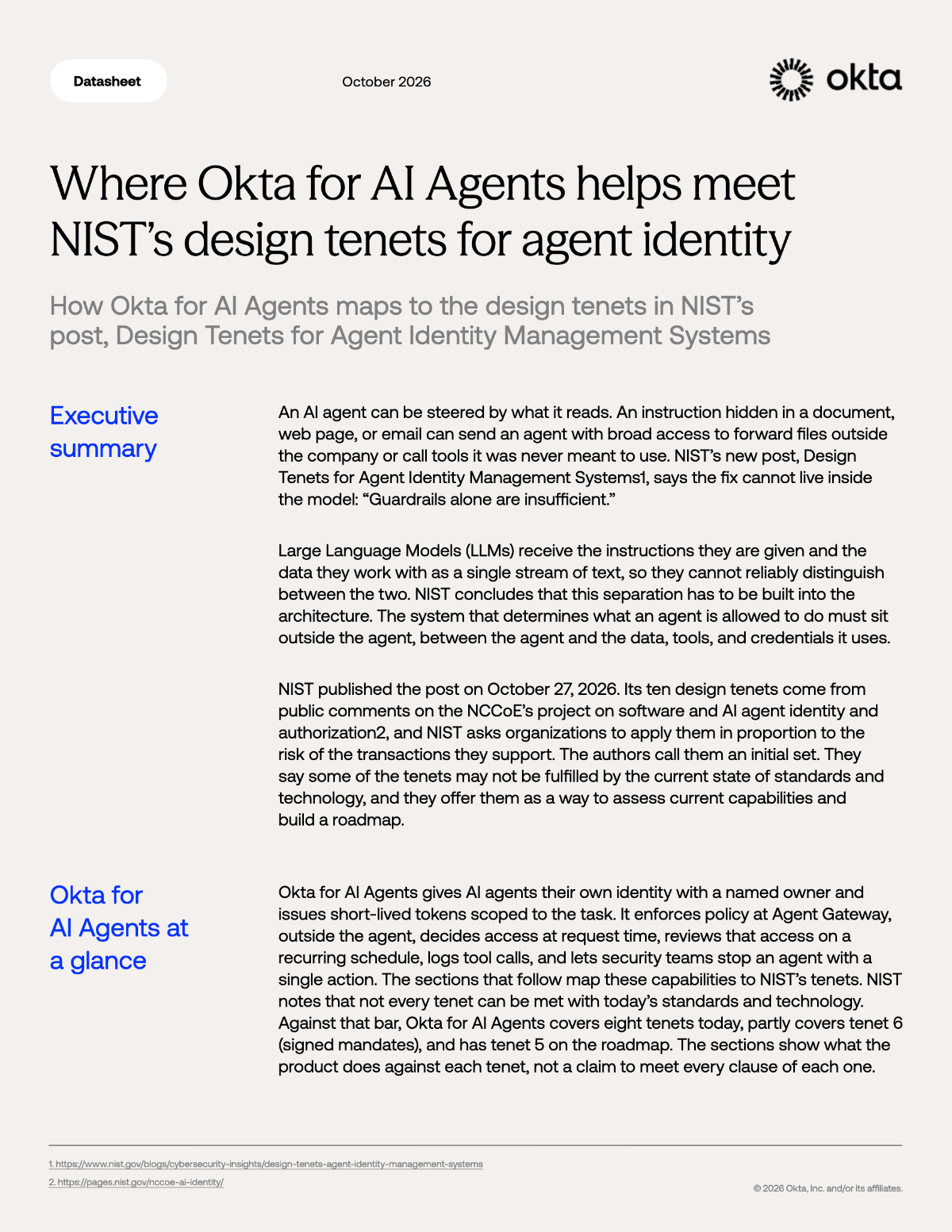
NIST says it plainly: "Guardrails alone are insufficient." An instruction hidden in a document, web page, or email can steer an agent with broad access. This datasheet maps Okta for AI Agents to each of the ten design tenets in NIST's post, Design Tenets for Agent Identity Management Systems. It shows where the product covers a tenet today, where it covers one in part, and where it is on the roadmap.


