




Okta Workflows is a no-code platform for automating identity processes.
This blog post is based on a question asked during office hours or the #okta-workflows channel in MacAdmins Slack: How do you trigger a flow?
Getting started
There are six ways to trigger a flow. They are
- Schedule (flow runs periodically)
- Event (flow is called when a particular event is fired)
- Manual (clicking the Test button)
- API endpoint (another system invokes a flow via an API endpoint)
- Helper flow (flow calling another flow)
- Delegated flow (let someone else in your organization invoke it)
1. Schedule
A flow can be scheduled to run periodically. For example, you can schedule a flow to run every hour, every day, or once a week (there are other options also).
To schedule a flow, add the Schedule event:
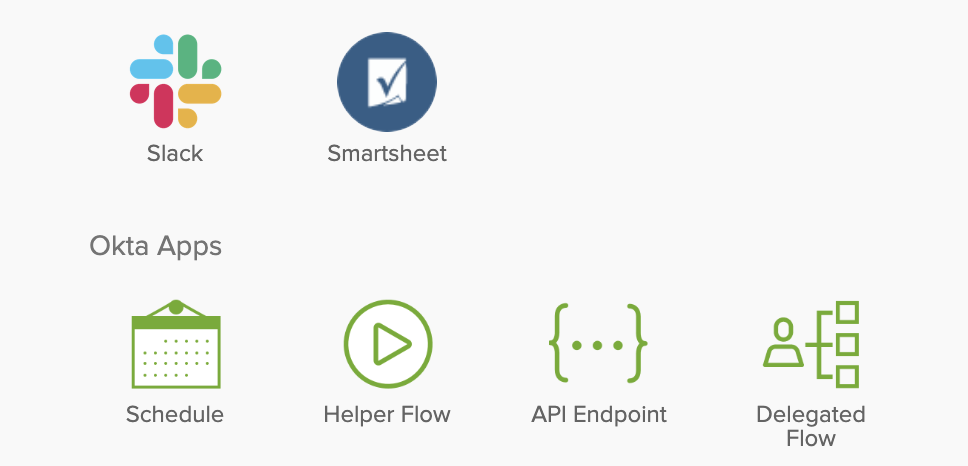 Events to trigger a flow
To configure the schedule, click the 🕔 at the bottom of the card:
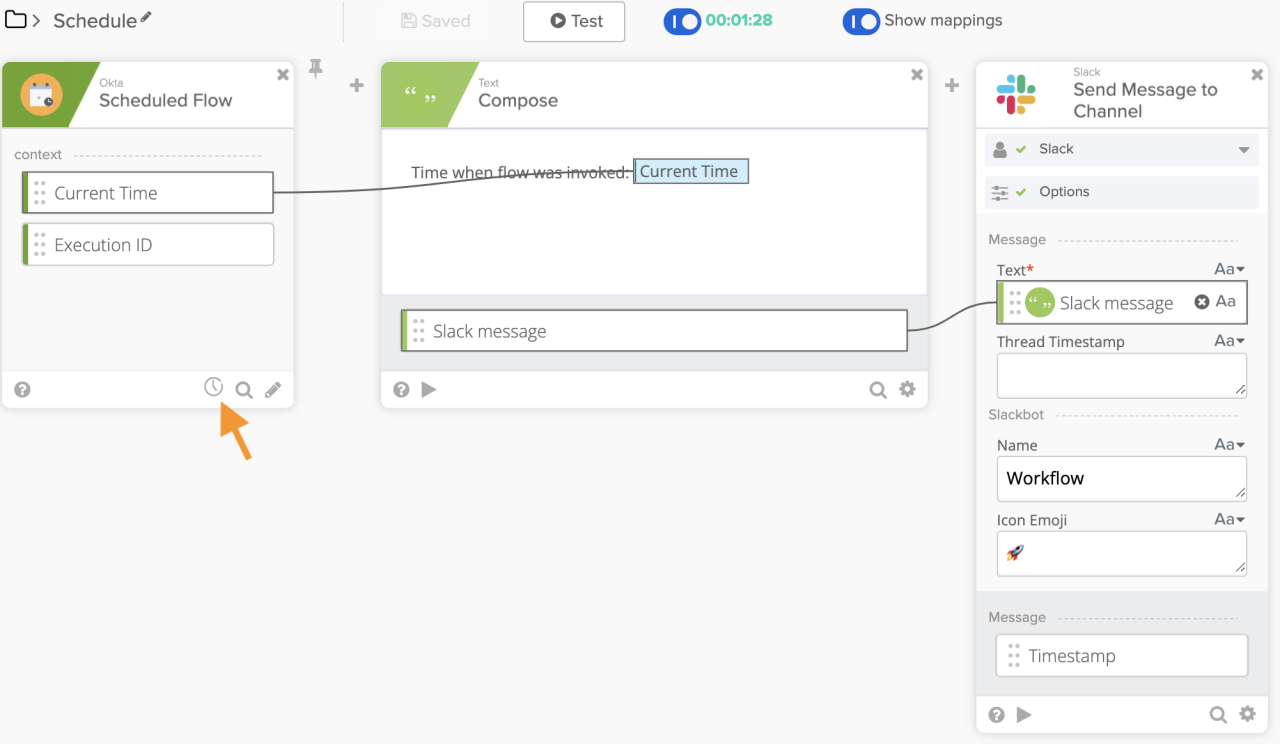 A flow that runs on schedule
Options to configure when to run a flow:
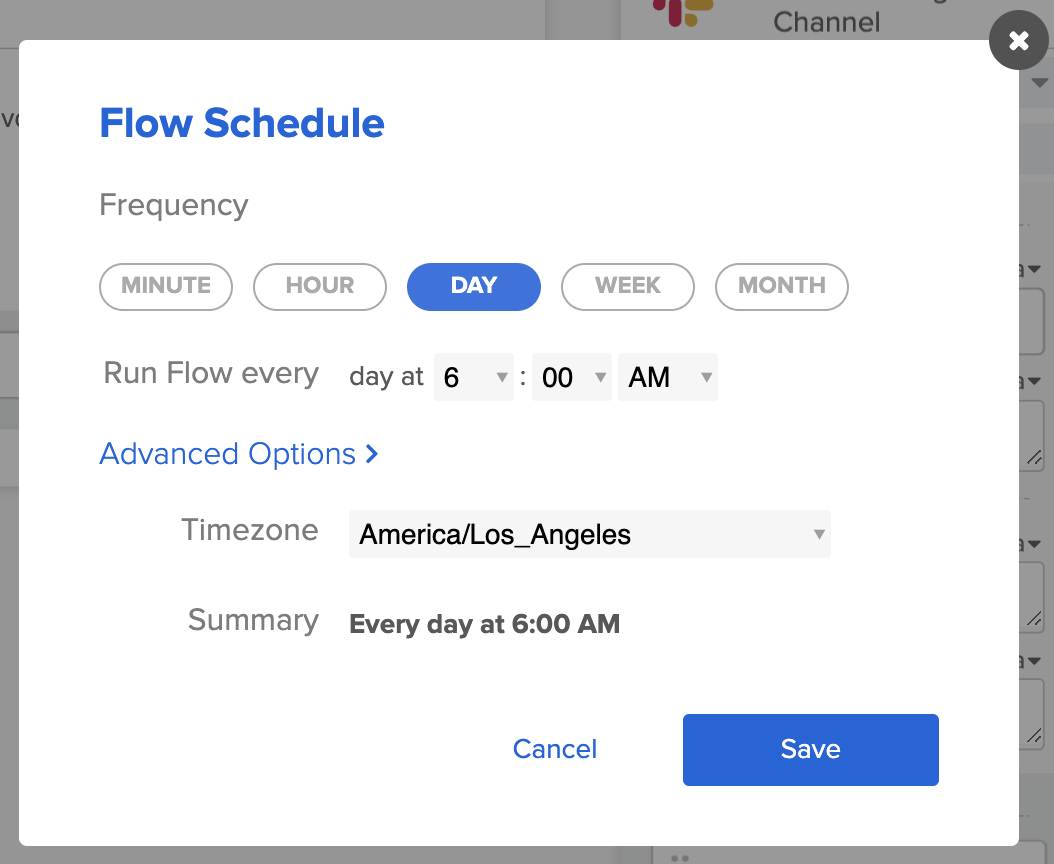 Flow schedule options
2. Event
Another way to trigger a flow is when a specific event occurs in an organization. For example, this flow will run when a user is added to a group:
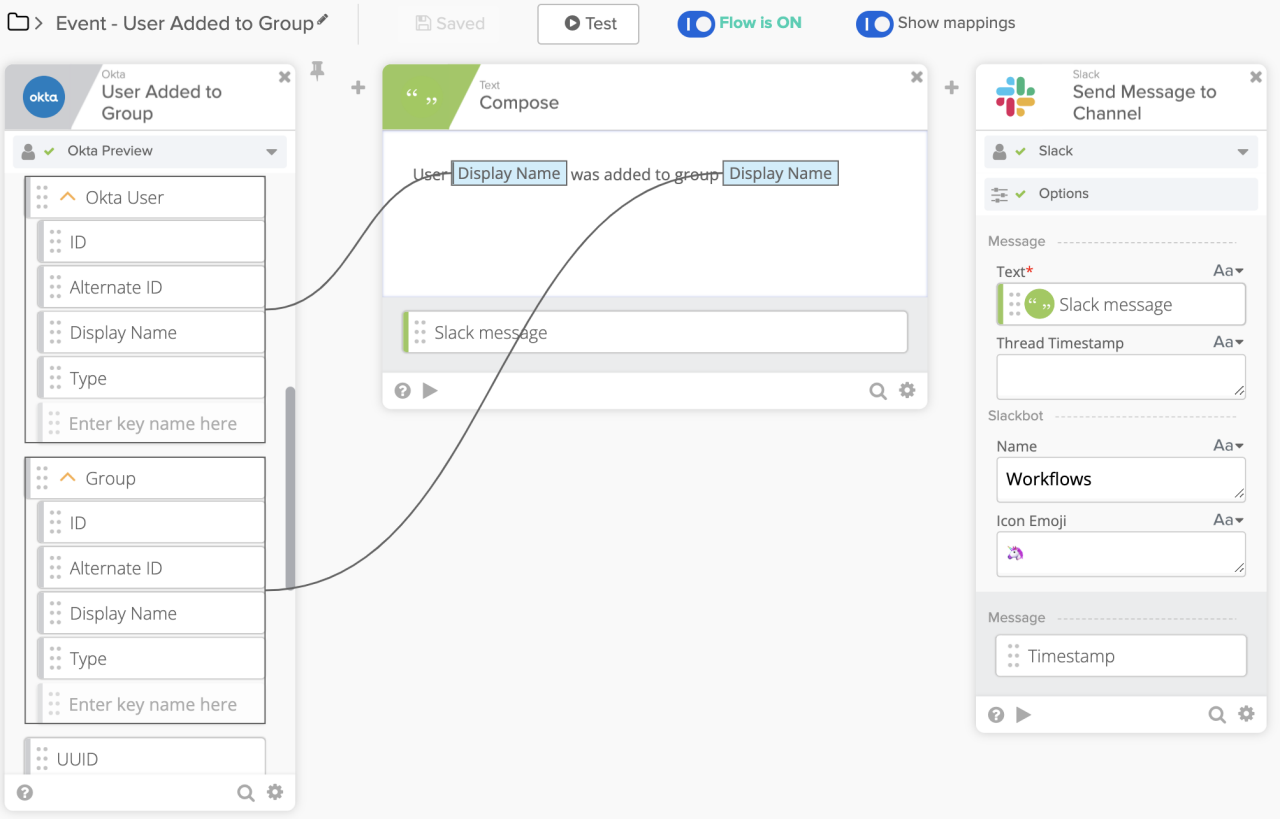 Trigger a flow when a user is added to a group
Every connector supports different events:
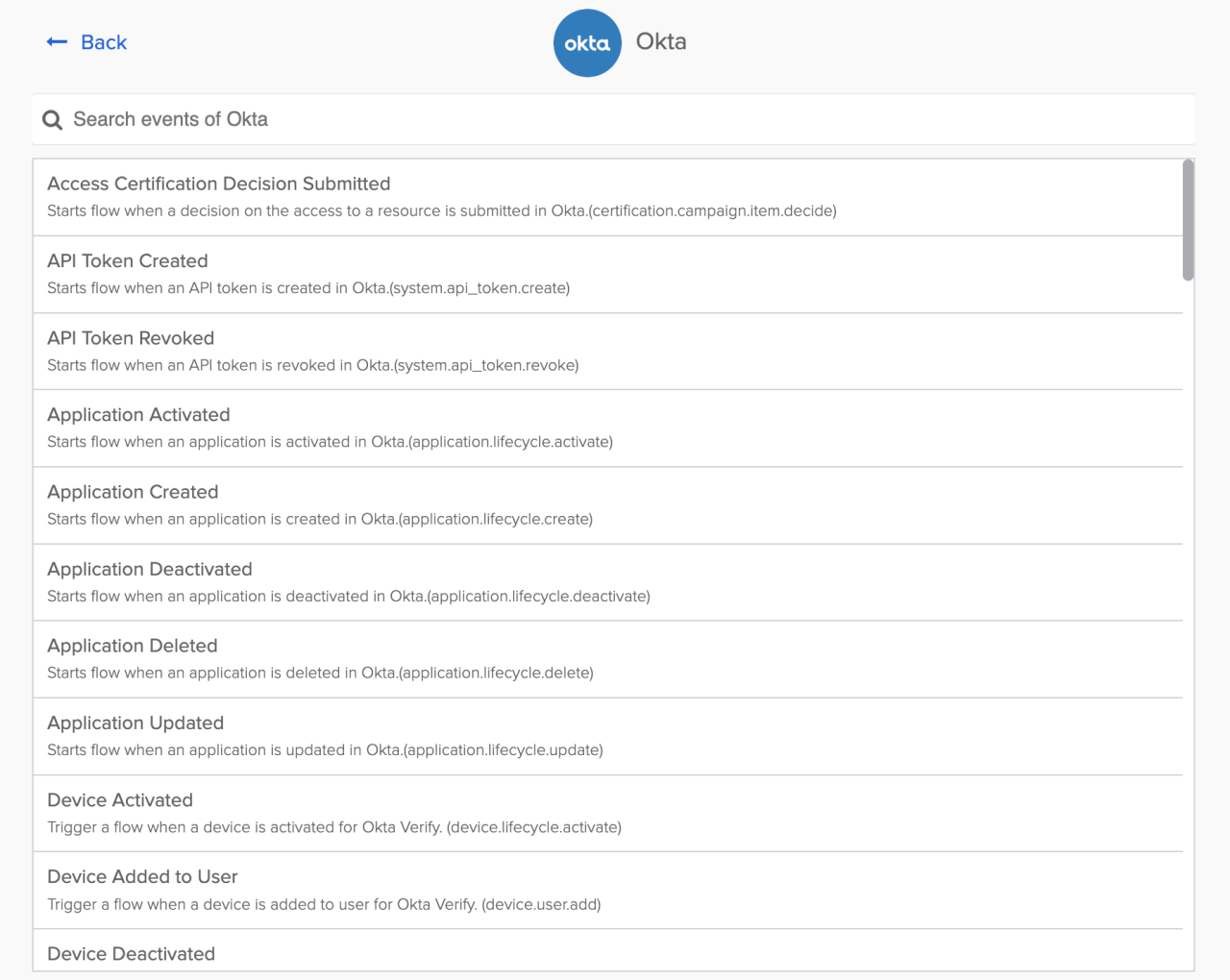 Events available from the Okta connector
3. Manual
If you have a flow that needs to run manually, infrequently, or just once, use the Test button to trigger a flow. Even though it says Test, it’s a perfectly fine way to run a flow.
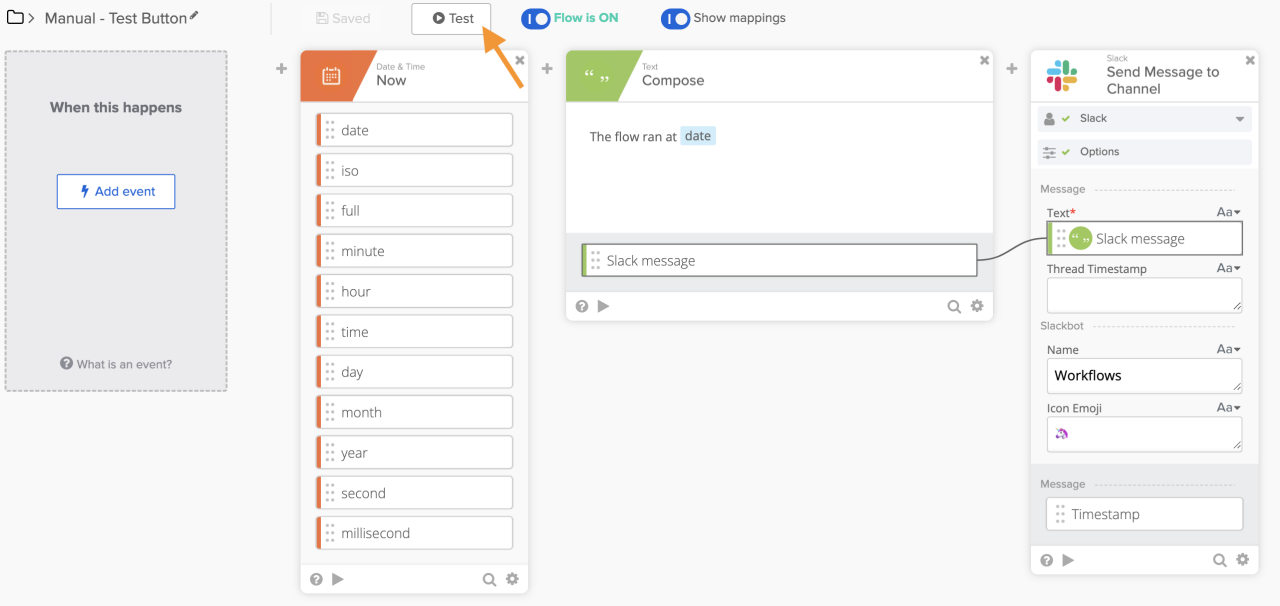 Running a flow via the Test button
When manually running a flow, you don’t need to have an event card set (1st card).
4. API endpoint
It is possible to trigger a flow from an external system via an API endpoint. For example, an event occurs in an external system, which calls an API endpoint that triggers a flow.
To trigger a flow via an API endpoint, use the API Endpoint event card:
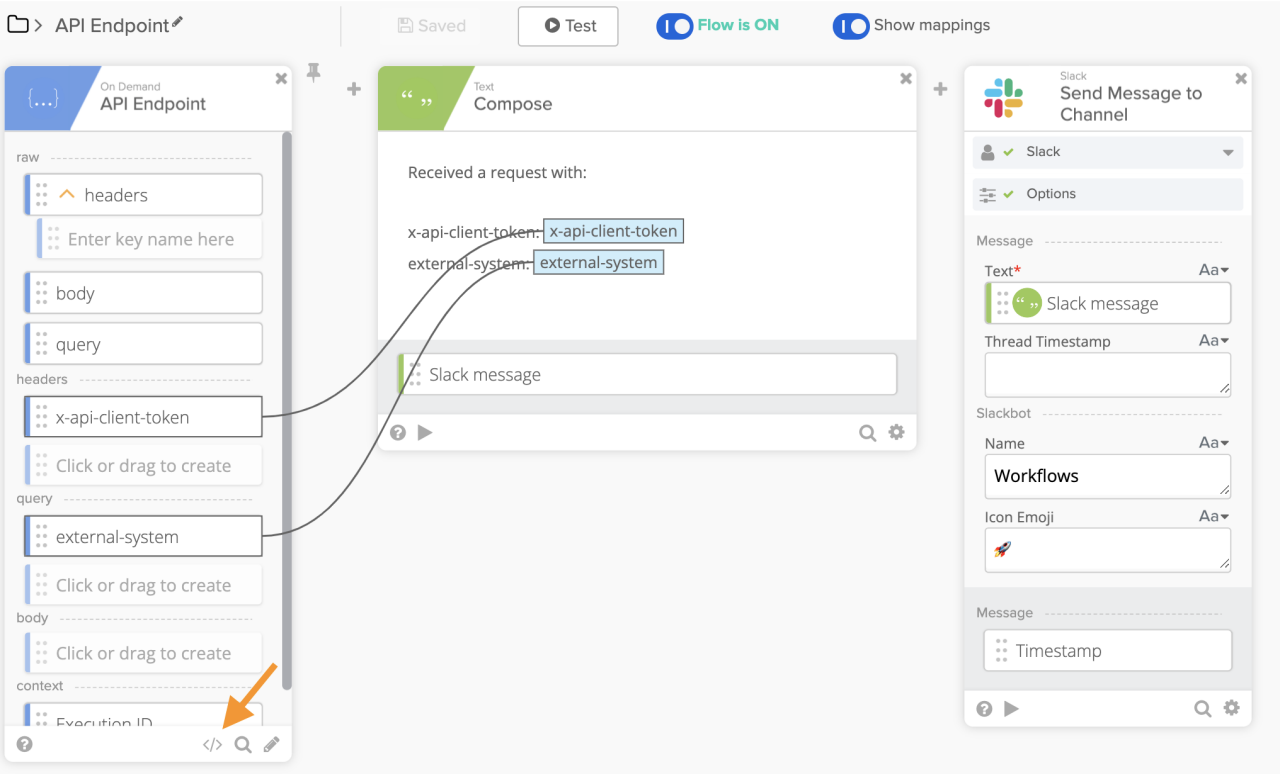 Triggered a flow via an API endpoint
The API endpoint information is available by clicking the </> icon at the bottom of the card.
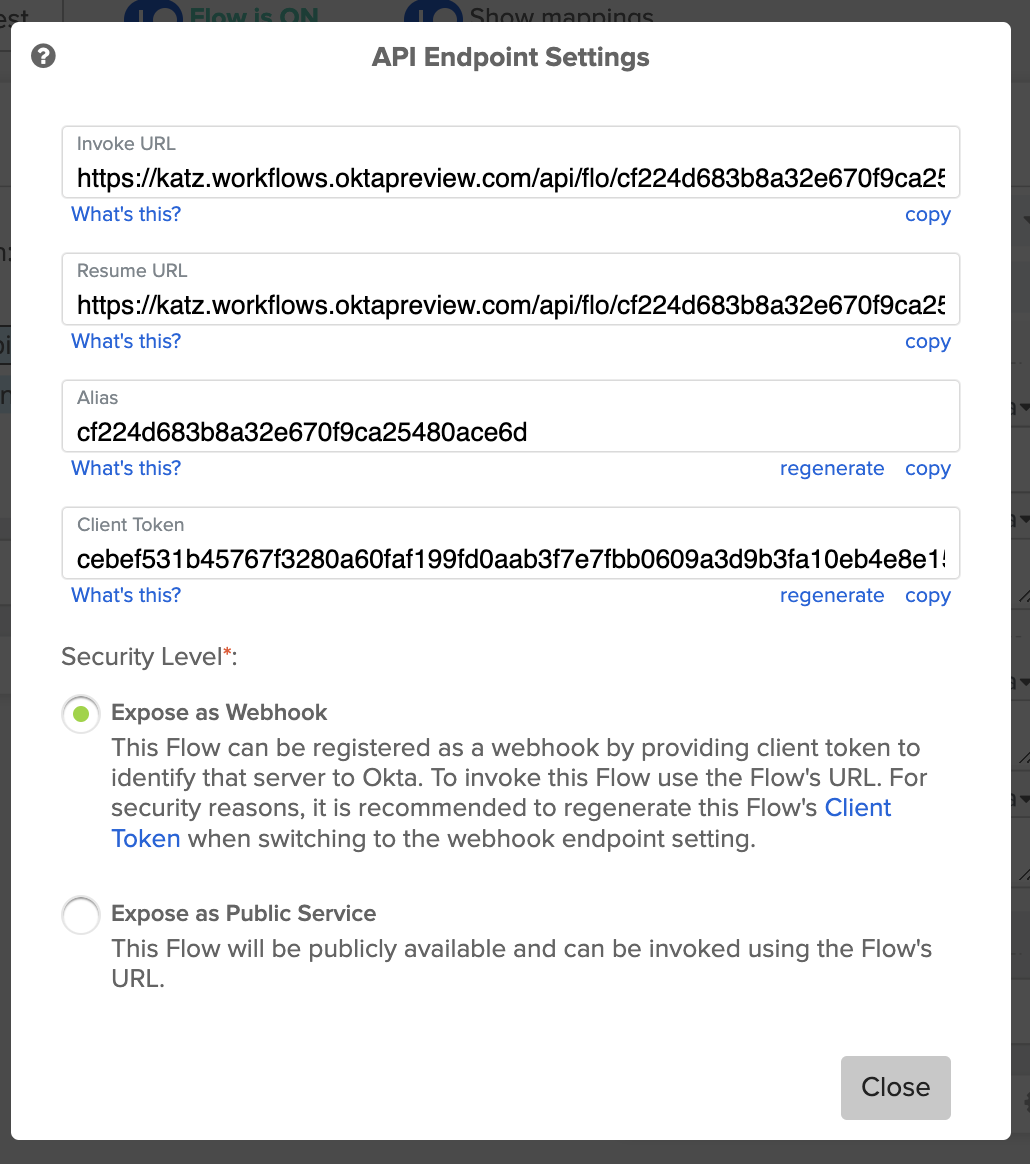 API endpoint settings
To test an API endpoint, use a service such as Postman.
5. Helper flow
A helper flow is a flow called from another flow. A helper flow is usually used when there is a list of objects (users, groups, etc.), and you need to iterate over each item in a list to perform an action.
In this example, a flow named Check last login will be called for each user found via List Users with Search card:
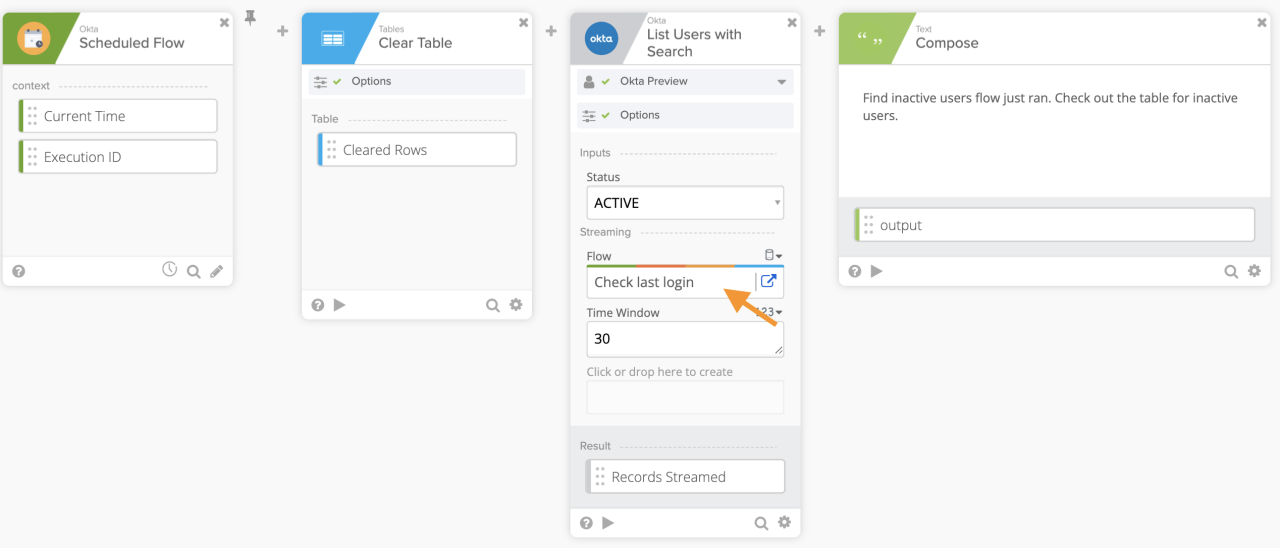 Calling a helper flow
Helper flow is called for each item in a list:
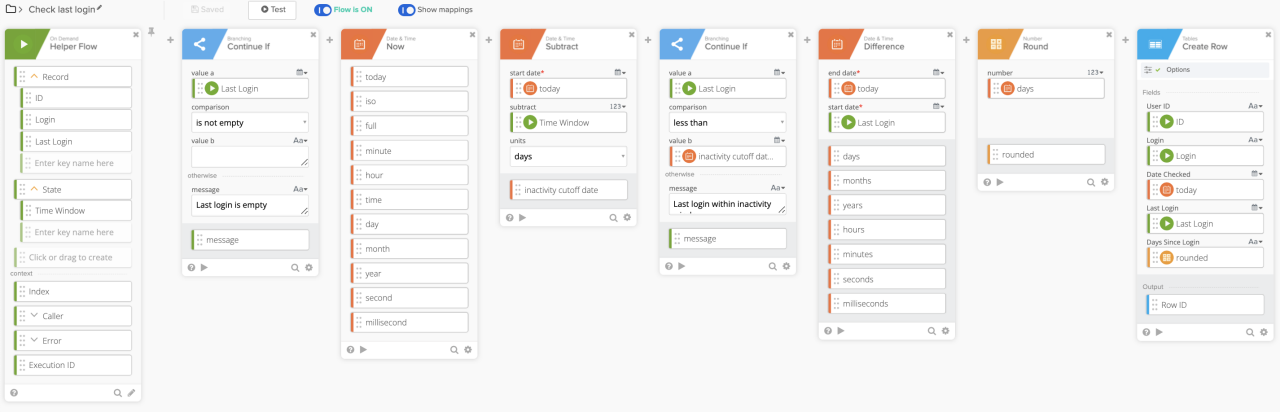 Helper flow
A flow becomes a helper flow when using On Demand – Helper Flow event card:
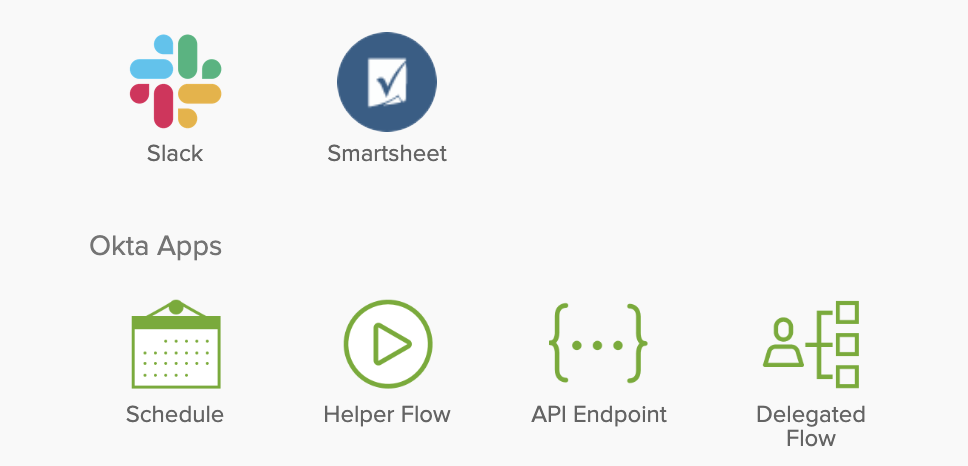 Flow trigger event cards
Flow chart view of the main flow and helper flow:
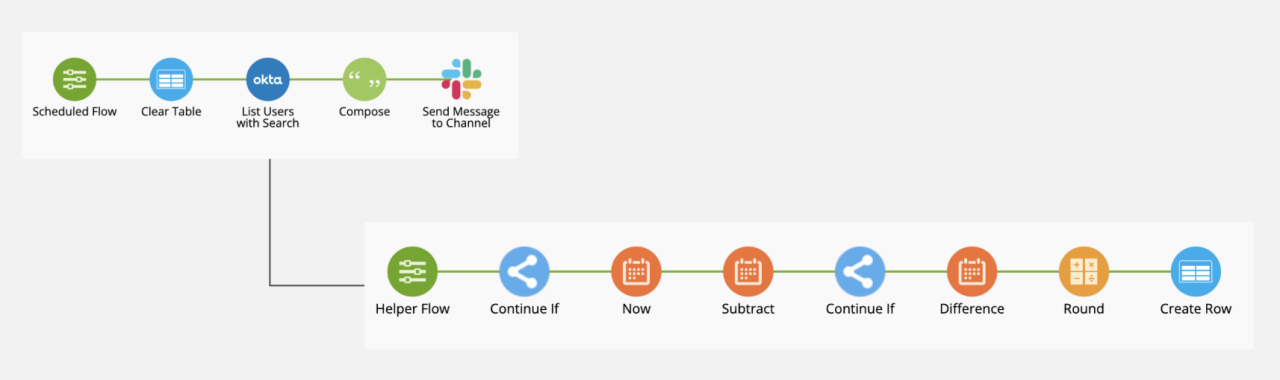 Main flow and helper flow
6. Delegated flow
Delegated Flow is when you delegate to another user to run a flow. That person might not be an administrator, but needs to be able to trigger a particular flow.
To make a delegated flow, add a Delegated Flow event card:
Note: as of this writing, Delegated Flow is an Early Access feature.
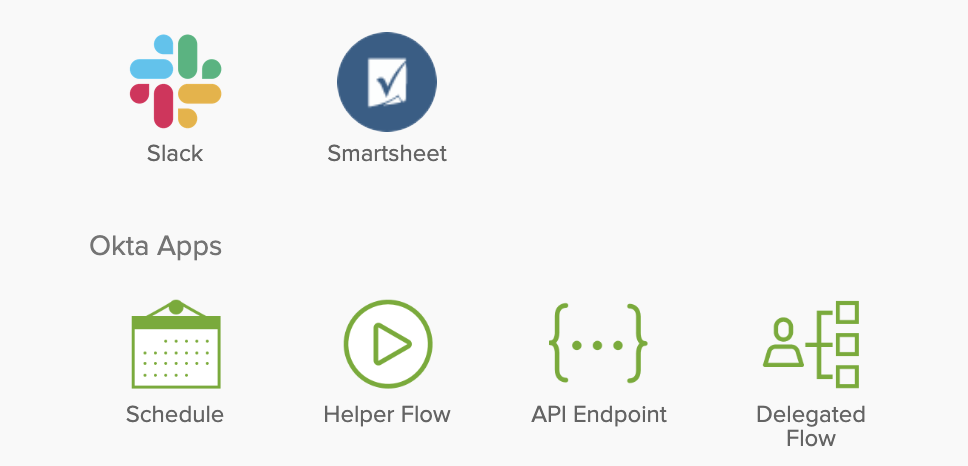 Delegated flow event card
A delegated flow event card can define one or more inputs. In the screenshot below, the flow has two inputs: Name and ID.
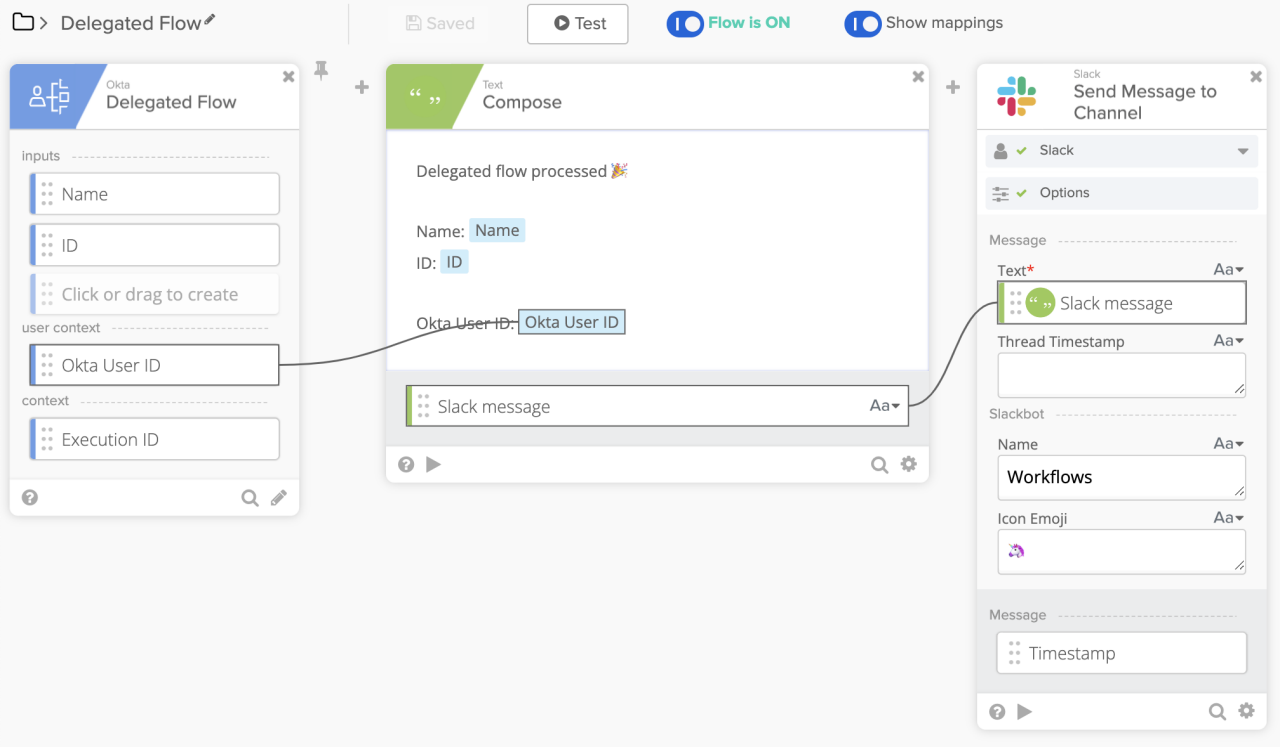 Delegated flow
Flow execution is delegated to another user within an organization. In the screenshot below, the user stella.green can run this flow:
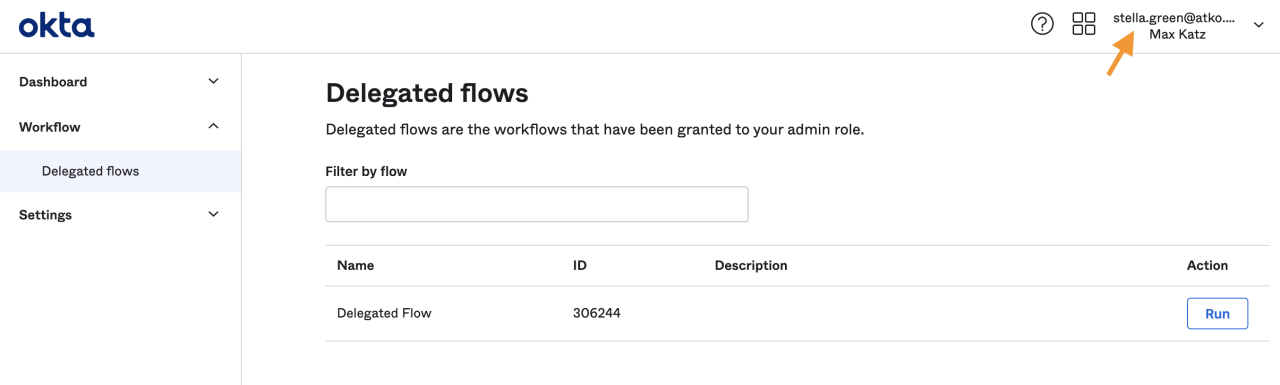 A flow delegated to a user to run
When Stella invokes the flow, Stella will need to enter flow inputs:
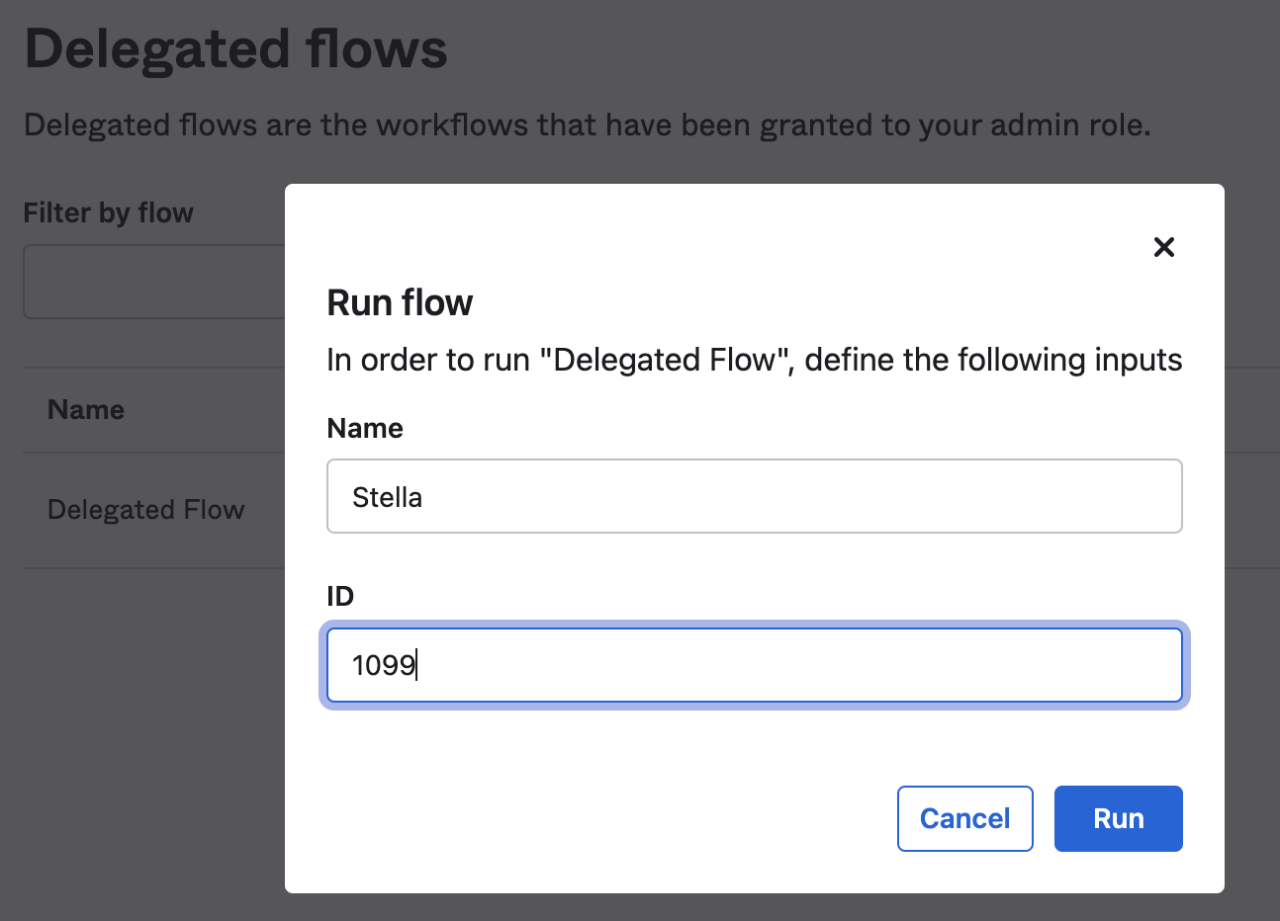 Delegated flow inputs
Looking at the flow history after Stella triggered the flow:
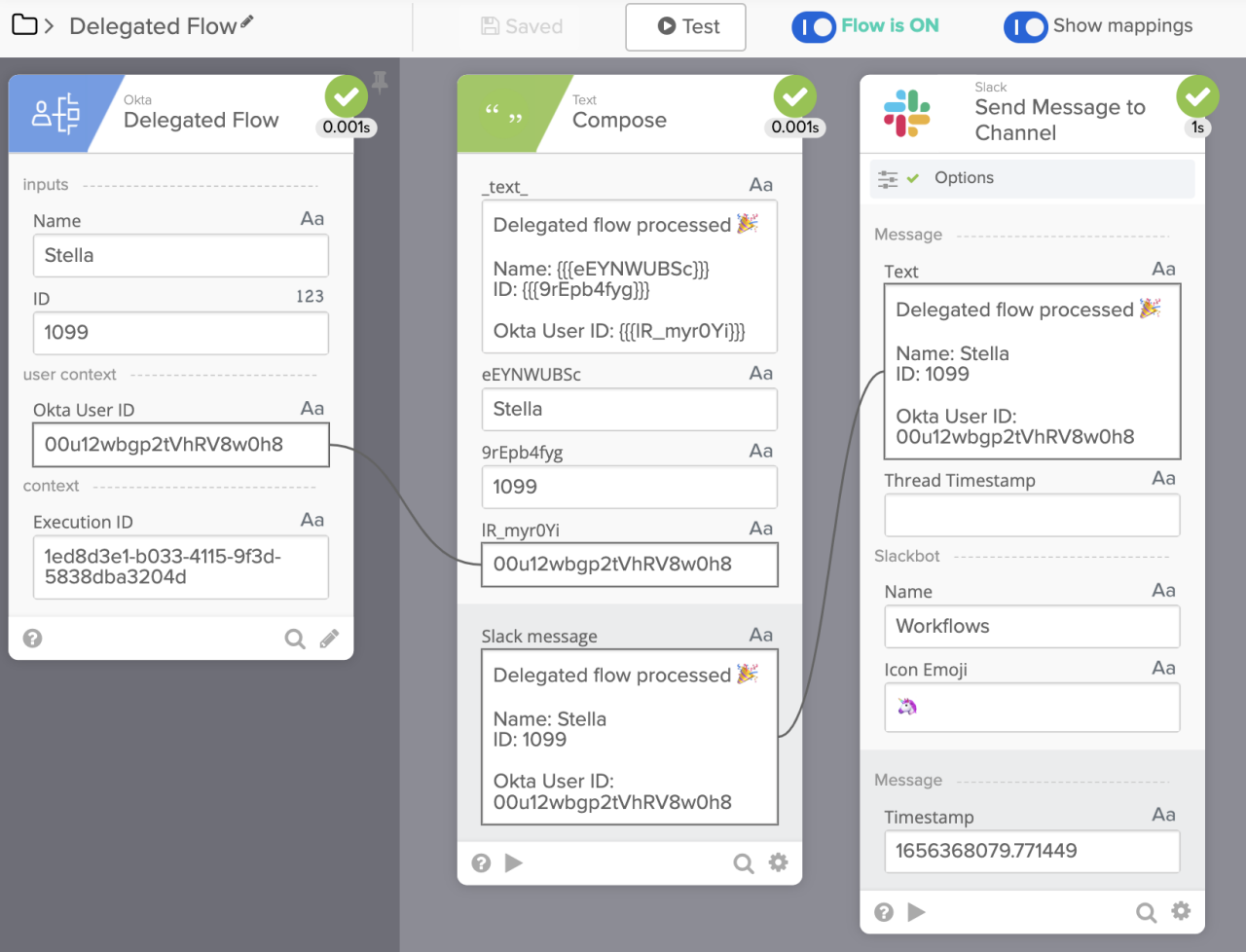 Delegated flow history
In this How-To Guide, you learned six different ways to trigger flow.
Get your Workflows questions answered
Do you have a question about Okta Workflows? Not sure how to build a flow? Join the weekly community office hours to get help.


